







The Critics: Setting the Agenda
First out of the gate are always the critics. Groups like the New York Film Critics Circle (NYFCC) and the Los Angeles Film Critics Association (LAFCA) are known for championing artistically ambitious, often unconventional films. Their early awards, typically
announced in December, can catapult a small indie or a foreign-language film into the mainstream conversation, forcing Academy voters to take notice. However, not all critics' awards are the same. Just this week, the Critics Choice Association announced nominees for its Super Awards, which celebrate fan-favorite genres like superhero, action, and horror. Films like "Superman" led the pack with multiple nominations, highlighting a different kind of critical appreciation that focuses on popular entertainment rather than traditional awards bait. This split shows that critics aren't a monolith; they can simultaneously reward high art and celebrate blockbuster craftsmanship.
The Guilds: The Industry Insiders' Verdict
If critics set the conversation, the guilds decide the frontrunners. The Directors Guild (DGA), Producers Guild (PGA), and Screen Actors Guild (SAG) are the most powerful predictors of Oscar success for a simple reason: their members are the industry. These are the very same directors, producers, and actors who make up the largest voting branches within the Academy itself. A win at the DGA or PGA is often a direct path to a Best Director or Best Picture Oscar. Last season, for example, the DGA winner for theatrical feature film went on to win the corresponding Oscar. Their nominations, usually unveiled in the heart of winter, act as the ultimate insider poll. When these different guilds align behind one film, it signals a powerful consensus from the people who actually make the movies, creating momentum that is very hard to stop.
The Academy: More Than Just Oscar Night
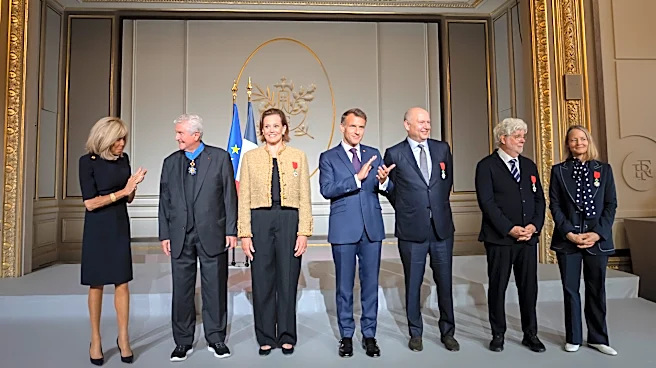
The Academy of Motion Picture Arts and Sciences, the organization behind the Oscars, sends its own signals long before nomination morning. These clues are often more subtle. For instance, in late June, the Academy invited 529 new film professionals to join its ranks. This annual expansion doesn't just grow the organization; it strategically diversifies the voting body, potentially shifting its tastes and priorities over time. Another major signal is the Governors Awards, where honorary Oscars are presented. The selection of icons like Glenn Close and Ridley Scott for this year's honors reinforces the Academy's values, celebrating lifetime achievement and enduring contributions to the craft. These institutional moves provide a framework for understanding what the world's most famous film body currently defines as excellence.
How to Read the Tea Leaves
So, what does it all mean when the signals are mixed? That's when the Oscar race gets truly exciting. A film might sweep the major critics' awards but get snubbed by the guilds, suggesting it's more of an artistic favorite than an industry one. Another might win the PGA award for its producing effort but see its director left out of the DGA nominations, hinting at broad support for the film as a whole but less enthusiasm for its specific direction. The holy grail of awards season is convergence. When a film manages to capture the passion of the critics, the respect of the guilds, and broad support across the Academy's various branches, it becomes a true frontrunner. Divergence, on the other hand, signals a wide-open race where anything can happen on Oscar night. The different kinds of support are not noise; they are the narrative of the season.