


The Maximalist Comeback
In the world of fashion, few elements are as unapologetically extra as rhinestone fringe. It’s the visual equivalent of a pop-rock guitar solo—loud, dazzling, and impossible to ignore. For years, that made it feel relegated to specific genres: the flamboyant
stage costumes of country legends, the sequined chaos of a Vegas revue, or the DIY flair of a bachelorette party. But something has shifted. On recent runways and red carpets, designers are embracing the joyous, kinetic energy of rhinestone fringe, and tastemakers from Beyoncé to Dua Lipa are wearing it with a straight-faced confidence that feels less like a costume and more like a statement. This isn’t a return to camp; it's a re-contextualization. The trend is thriving in a post-minimalist world where “dopamine dressing”—wearing clothes that spark joy—is the new mandate.
From Nudie Suits to High Fashion
To understand where rhinestone fringe is going, you have to know where it came from. Its most iconic American roots trace back to Nudie Cohn, the legendary tailor behind the “Nudie Suits” that defined the look of mid-century country-and-western stars. From Porter Wagoner to Gram Parsons and Elvis Presley, his clients were walking works of art, covered in intricate embroidery and, of course, shimmering rhinestones. The fringe added movement and a theatrical flourish perfectly suited for the stage. For decades, this was its primary association: pure, unadulterated American showmanship. It was fun, it was loud, and it was decidedly not subtle. The leap from Nashville’s Grand Ole Opry to the ateliers of Paris seems vast, but fashion has always loved to borrow from subcultures, polishing perceived kitsch into something new.
The Couture Difference: Precision and Intent
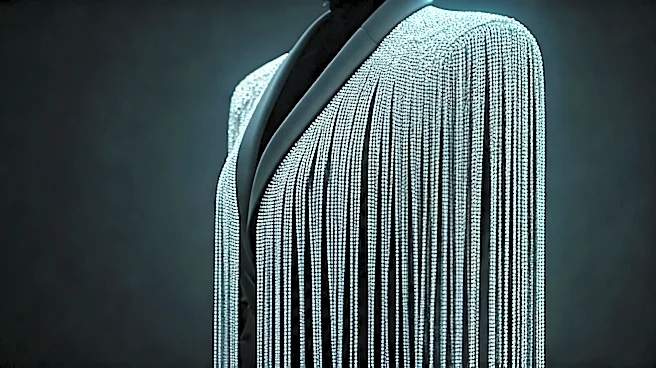
So, what does it mean for fringe to be “cut like couture”? It’s all in the details. First is the quality. Couture-level garments use high-grade crystals, often from houses like Swarovski, which catch the light with a depth and brilliance that plastic sequins can’t replicate. Second is the placement. Instead of being haphazardly attached, each strand of fringe is meticulously placed to enhance the body’s movement and the garment’s silhouette. A modern designer might use fringe to create a liquid, metallic waterfall down the sleeves of a sharply tailored blazer, or to trace the hem of a perfectly draped slip dress. The fringe isn’t just an addition; it’s an integral part of the garment’s architecture. This precision transforms it from a decorative afterthought into a sophisticated design element. It’s the difference between a craft project and a work of art.
Spectacle Meets Sophistication
The modern appeal of rhinestone fringe lies in this masterful balance. Designers are pairing the inherent spectacle of sparkle with the quiet confidence of high-end tailoring. A jacket might feature a classic, structured shoulder line that suddenly gives way to a shimmering curtain of crystal fringe. A skirt might be cut with minimalist precision, but its hem dissolves into a cascade of light-catching strands. This combination allows the wearer to have it both ways: you get the head-turning glamour and undeniable fun of the fringe without sacrificing the polish and elegance of a well-made garment. It captures a distinctly modern desire to be seen and celebrated, but on our own terms. It’s a form of power dressing for an era that values both strength and sparkle.