


What Is the Herzog Shot?
There isn't one single shot, but a recurring cinematic motif that functions as his thesis statement. It’s the long, static, meditative take on a vast landscape, often with a human figure dwarfed by its scale. Think of the opening of Aguirre, the Wrath
of God, where conquistadors snake down an impossibly steep, mist-shrouded mountain, looking like ants in the face of an indifferent world. Or the final, heartbreaking shot of Stroszek, where a chicken dances in a roadside attraction, an absurd spectacle at the end of a broken dream. The shot is defined by its patience and its perspective. It forces the viewer to confront the sheer, overwhelming presence of a world that is ancient, powerful, and utterly unconcerned with the human dramas playing out within it.
Nature Beyond the Postcard
Crucially, these are not pretty travelogue images. Herzog is famous for his belief that nature is not harmonious or serene, but rather a realm of chaos, hostility, and what he calls “overwhelming and collective murder.” His landscape shots are designed to evoke this terrifying reality. During the filming of Fitzcarraldo, he famously ranted about the jungle, describing it as “vile and base,” a place where birds don't sing but “screech in pain.” His signature shot, therefore, is an argument against the romantic, sanitized version of the wild. It’s a challenge to the viewer to see nature as he does: a godless, unfinished creation full of misery and grandeur. The landscapes are characters themselves, but not benevolent ones; they are forces to be reckoned with.
The Stare Into the Abyss
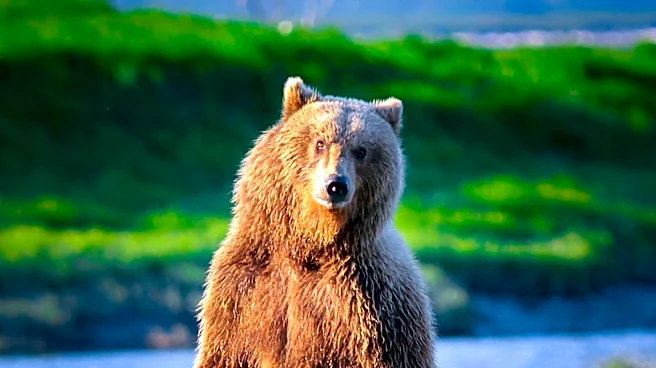
A variation on the landscape shot is what could be called the “Herzog Stare.” This is often a close-up of an animal or a person staring blankly, either at the camera or into the void. The chickens in Stroszek, the unnerving gaze of the bears in Grizzly Man, or the catatonic look on his actors' faces all serve a similar purpose. The shot is not about finding a shared soulfulness or connection. Instead, it highlights a profound otherness, an unbridgeable gap between the observer and the observed. It’s the visual equivalent of looking into the abyss and finding nothing staring back. It’s a confrontation with a universe that offers no easy answers and no comforting reflections of our own humanity.
The Search for Ecstatic Truth
Ultimately, Herzog’s signature shot is a tool for achieving what he famously calls “ecstatic truth.” He believes that cinema can and should transcend the “accountant's truth” of mere facts to reach a deeper, poetic, and more illuminating reality. By stylizing, fabricating, and holding a shot for an uncomfortable length of time, he isn't just showing you a mountain or a chicken; he’s trying to evoke the feeling of being dwarfed by the world or the absurdity of existence. He famously claimed radioactive albino crocodiles existed near the Chauvet Cave in a documentary, not because they did, but because the image conveyed a deeper, more primeval truth about the strange beauty of the place. His shots are not just images; they are philosophical arguments rendered on film.