





The 'Fishes' Blueprint
To understand how a single-meal season could work, you only need to look back at Season 2’s masterpiece, “Fishes.” The hour-long flashback to a disastrous Berzatto Christmas dinner was a self-contained narrative hurricane. It was loud, stressful, and almost
painfully real, using a single event to unpack years of trauma and complex relationships. The episode provided a skeleton key to the entire series, explaining Carmy’s anxiety, Sugar’s gentle persistence, and Mikey’s destructive charisma. It proved that for the Berzattos, a meal is never just a meal—it’s a battlefield, a confessional, and a group therapy session all at once. A hypothetical Season 5 structured this way would take that concept to its extreme, turning the subtext of one episode into the entire text of a season.
Setting the Table for Chaos
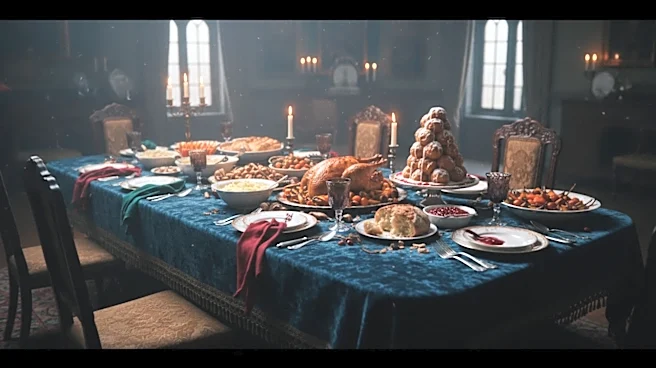
Imagine the scene: it’s the morning after the Season 4 finale, which saw Carmy quit the restaurant, leaving it to Sydney, Richie, and Natalie. The fifth and final season, confirmed to be set over a single day, could easily center on one pivotal gathering. Who is at this table? Carmy, dragged back against his will. Sydney, now in charge and facing an impossible task. Richie, the reformed hothead trying to hold it all together. Sugar, desperately trying to broker peace. And you have to include Donna, the unstable matriarch whose presence is a guaranteed emotional accelerant. Each character would arrive with the baggage of four seasons, their unresolved conflicts simmering just below the surface. The tension wouldn't come from a dinner service timer, but from the personal history packed into every glance, interruption, and passive-aggressive compliment.
The Slow-Burn and the Explosion
The beauty of this concept lies in the pacing. Creator Christopher Storer has always excelled at building pressure through sound design, claustrophobic close-ups, and overlapping dialogue that mimics the chaos of real family arguments. A whole season in one location would amplify this. Early episodes could focus on the lead-up: the tense car rides to the house, the awkward greetings, the strategic avoidance of certain topics. The middle of the season would be the meal itself, a slow escalation where small talk gives way to pointed questions and old wounds are prodded. The final episodes would be the inevitable explosion—the shouting matches, the tearful confessions, the moment a car drives through the dining room, as happened in the "Fishes" flashback. It would be an entire arc of television where the main course is catharsis, served with a side of simmering rage.
More Than Just a Meal
Ultimately, a meal-as-a-season wouldn't just be a formal gimmick; it would be the ultimate expression of the show’s central themes. The Bear has always used food as a metaphor for love, trauma, ambition, and community. This final meal would be the ultimate test. Can this family, bound by tragedy and a shared passion for creation, finally break the cycles of dysfunction? Can Carmy find peace outside of the kitchen? Can Sydney, Richie, and the crew prove they can succeed without him? Following a fourth season that critics found to be an improvement over the third but still somewhat lacking in narrative momentum, this bold structure could be the perfect way to bring all the show's ingredients together for one last, unforgettable service.