






The Core Engine: A Toy’s Purpose
To understand why Toy Story keeps going, you have to ignore the box office receipts for a moment and look at the simple, powerful idea that started it all. The franchise's true 'origin story' isn't just the plot of the first film; it’s the core thematic
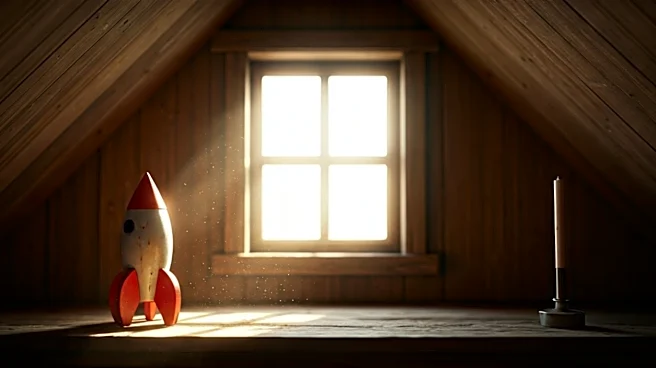
engine Pixar’s brain trust built: A toy’s entire existence is defined by its purpose to a child. This isn't just a cute premise; it’s a source of existential terror. Woody isn't afraid of Buzz Lightyear because he's a cool new toy; he's afraid of becoming irrelevant, of losing his meaning. Every single conflict in the series stems from this fundamental anxiety. What happens when your kid grows up? What if you get lost? What if you’re replaced? This initial concept, born in the early '90s, was so emotionally resonant that it became a perpetual motion machine for storytelling. It’s not a plot that can be resolved with one adventure; it’s a universal human fear (of obsolescence, of being forgotten) cleverly disguised in plastic.
From One Child to the Next
The first three films are a perfect trilogy about the life cycle of that core purpose. *Toy Story* established the fear of being replaced. *Toy Story 2* deepened it, asking if it’s better to be preserved forever in a museum (guaranteed immortality, but no love) or risk heartbreak and eventual abandonment with a child (a finite life full of meaning). Woody’s choice to return to Andy sets the stage for the inevitable pain of the third film. *Toy Story 3* is the gut-punch ending to that arc. Andy grows up. The toys face their 'death' in the incinerator before finding a new purpose with Bonnie. For many, this was the definitive, emotionally perfect conclusion. It honored the original theme by showing that a toy’s purpose could be passed on. It was a beautiful, complete story. But the engine of 'purpose' wasn't destroyed; it was just transferred to a new owner. The fundamental question remained: what now?
The ‘Perfect’ Ending Problem
*Toy Story 4* was controversial precisely because it dared to suggest the story wasn't over. While many fans felt it was an unnecessary epilogue, the film did something crucial: it broke the original formula. It asked a radical new question: Can a toy have a purpose *without* a child? Woody, feeling sidelined by Bonnie, ultimately chooses a new life as a 'lost toy,' helping prize toys find kids at a carnival. In doing so, he separates from Buzz and the gang, shattering the core ensemble for the first time. This ending, whether you loved or hated it, proved that the franchise's thematic engine could evolve. The story was no longer just about 'how do I serve my kid?' but 'how do I define my own existence?' By separating Woody and Buzz, the two pillars of the franchise, Pixar didn't end their story; they created the single biggest piece of unresolved narrative tension in the series' history. The team wasn’t whole anymore.
The Inevitability of a Reunion
This brings us to *Toy Story 5*. After the franchise tried to expand its universe with *Lightyear*—a spinoff that focused on lore instead of the core emotional themes—and was met with a collective shrug, the path forward became clear. The magic isn’t in the sci-fi backstory of Buzz's character; it’s in the relationship *between* Woody and Buzz. The 'origin story' that matters is their dynamic: the cowboy and the space ranger, the pragmatist and the dreamer. *Toy Story 4* left that relationship fractured. Therefore, *Toy Story 5* isn't just inevitable for financial reasons; it's narratively inevitable because the central partnership is incomplete. The most compelling story left to tell is how, or if, these two friends find their way back to each other. It’s a return to the first principle of the franchise: these characters and their emotional bonds are the entire point. The fifth installment is poised to be a direct answer to the fourth film’s cliffhanger, bringing the focus back from universe-building to the heartfelt character drama that made us fall in love with the series in the first place.