





The Danger Is Already in Your House
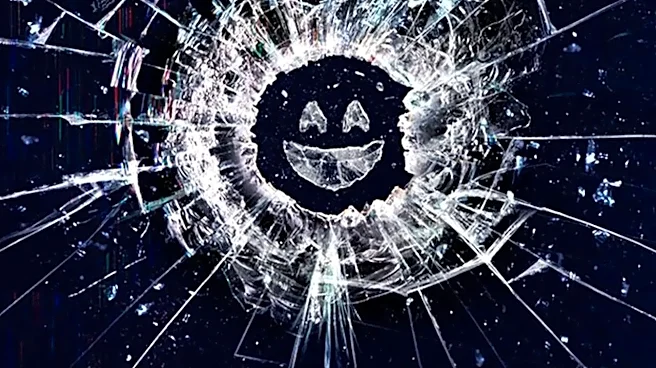
The secret to ‘Black Mirror’ isn’t that it predicts a dark future; it’s that it diagnoses our anxious present. The show’s creator, Charlie Brooker, famously named the series for the dark, reflective surface of a powered-off screen. Its horror works because
the technology it portrays is never outlandish fantasy. Instead, it’s a plausible next step. Think of the social credit system in "Nosedive," where every interaction is rated, determining one's socioeconomic status. It’s an amplification of our current obsession with likes, shares, and online validation. The show takes a technology or social trend we already embrace—social media, smart home devices, cloud data—and pushes it just one click further, forcing us to confront the unnerving trajectory we are already on. This creates a unique form of horror rooted not in the unknown, but in the terrifyingly familiar.
The Call Is Coming from Inside Your Head
In this world, the monsters are never aliens or ghouls; they are us. The technology in ‘Black Mirror’ is rarely the villain. More often, it is a neutral tool that merely amplifies our worst human impulses: jealousy, vanity, cruelty, and paranoia. In "The Entire History of You," a memory-recording implant doesn't create suspicion in a relationship; it provides an obsessive way to validate it, leading to ruin. The episode's power comes from recognizing the very human, self-destructive desire to know, to prove, and to possess. The show consistently argues that the fatal flaw isn't in the code, but in the human condition. Technology simply gives our inner demons a powerful new toolkit, making the resulting horror feel less like a cautionary tale about gadgets and more like an uncomfortable look in the mirror.
The Uncanny Valley of the Self
Some of the show's most profoundly unsettling moments come from its exploration of consciousness and identity. Episodes like "White Christmas" and "USS Callister" delve into the horror of digital copies of human minds, trapped in simulated realities and subjected to eternal, programmable torment. This isn't the fear of death, but the fear of an existence where your very self can be stolen, copied, and manipulated. The series taps into a deep anxiety about what makes us who we are. If your memories can be edited, your consciousness uploaded, or your personality simulated, where does the authentic self reside? This philosophical horror is far more intimate than a physical threat. It’s the dread of discovering you are no longer in control of your own soul, a concept that leaves a much deeper and more lasting chill than any monster could.
No Catharsis, Just Lingering Unease
Traditional horror stories often end with the monster being defeated and order being restored. ‘Black Mirror’ frequently denies its audience that comfort. Many episodes conclude on a note of bleakness or ambiguity, leaving the viewer to grapple with the horrifying implications. In "White Bear," the gut-wrenching twist reveals that the protagonist's terror is a form of engineered, cyclical punishment, and the story ends only to begin again. In "Shut Up and Dance," the audience is manipulated into sympathizing with a character, only to have that empathy weaponized against them in the final moments. This lack of resolution is intentional. The dread is meant to follow you. By refusing to provide a neat ending where the 'bad thing' is contained, the show suggests that these technological and moral quagmires are not easily solved. The horror lingers because the problems it presents are still very much with us after the credits roll.