
From Fan Fair to Festival
To understand CMA Fest, you have to look back at its origins. It began in 1972 as “Fan Fair,” a modest event designed to give fans a chance to meet their favorite country stars. While other music festivals focus on curated cool or counter-cultural escapism,
CMA Fest has never strayed from its core mission: celebrating the unique, symbiotic relationship between country artists and their audience. The festival’s DNA is built on access. For decades, that meant artists working autograph booths for hours, a tradition that, while logistically impossible at today’s scale, still informs the event’s spirit. It’s a four-day convention for the culture of country music, where the fans are not just consumers but active participants and honored guests.
The City Is the Venue
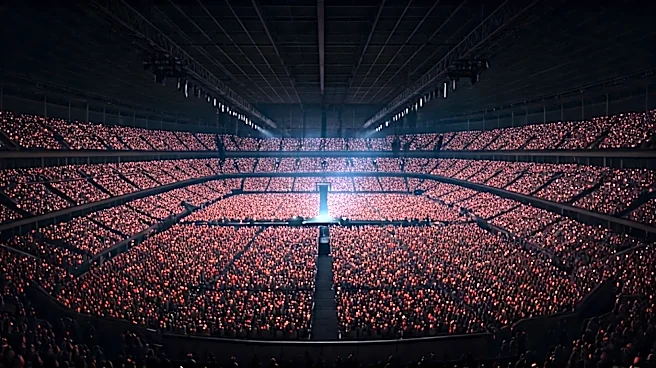
Unlike a festival contained within a single field or fairground, CMA Fest colonizes an entire city center. The Cumberland River becomes a natural divider for a sprawling campus of music. On one side, Nissan Stadium hosts the ticketed, superstar-packed nightly shows. On the other, public spaces like Riverfront Park and the streets of Broadway transform into a constellation of free stages. This is where the shared language begins to form. Walking from one stage to another, you’re immersed in a constant soundtrack. A rising star plays an acoustic set on a small pop-up stage while a bona fide hitmaker’s soundcheck echoes from the main stage a few blocks away. The city itself becomes the festival grounds, blurring the lines between performer and attendee, and turning a simple walk for a hot dog into a potential musical discovery.
An Unspoken Uniform
Look around at the crowd, and you’ll see the language being spoken visually. While there’s no official dress code, an unofficial uniform emerges: cowboy boots (often brand new), a hat (optional but encouraged), and a t-shirt repping a favorite artist or a clever country lyric. This isn’t about conformity; it’s about signaling. It’s a visual shorthand that says, “I’m one of you.” It’s an icebreaker. Complimenting someone’s boots or the vintage Alan Jackson shirt they’re wearing is an easy entry into a conversation with a total stranger. This shared aesthetic creates a powerful sense of belonging, instantly connecting a fan from rural Ohio with another from Southern California. They might not have anything else in common, but for four days, they’re fluent in the same style.
The Social Contract of Fandom
Perhaps the most remarkable aspect of CMA Fest is its atmosphere. For an event that draws hundreds of thousands of people into a hot, crowded urban environment, it remains astonishingly friendly and polite. There’s an unspoken social contract at play. People make room for each other on packed sidewalks, strike up conversations while waiting in long lines for water, and share stories of which artists they’re most excited to see. The foundational belief is that everyone is there for the same reason: a deep, earnest love for country music. This creates a baseline of trust and camaraderie that’s rare at gatherings of this size. Artists often remark that the CMA Fest crowd is one of the most generous and engaged audiences they play for all year, because the audience is not just watching a show—they are living out their identity as fans.