

It's About Collaboration, Not Headliners
At most festivals, the lineup is a rigid hierarchy. At Newport, it’s more of a friendly suggestion. The festival’s defining feature is its emphasis on collaboration. Marquee names are often listed with a casual “& Friends,” signaling that the real magic
isn’t the star, but who they bring on stage. The 2026 festival was a prime example, with Hayley Williams hosting a dozen guests including Jack Antonoff and Lucy Dacus, and Nathaniel Rateliff’s closing set featuring icons like Mavis Staples and Joan Baez. These aren’t just planned duets; they’re often spontaneous, once-in-a-lifetime pairings. This tradition creates an atmosphere where the audience’s attention shifts from a single headliner to the collective, fostering a sense of shared discovery. The biggest “moment” might not be a hit song, but a quiet, unrehearsed cover between artists who admire each other.
A Legacy That Encourages Humility
You can’t step onto a stage at Fort Adams without feeling the weight of history. This is where Bob Dylan went electric, forever changing music. It’s where Joan Baez made her surprise debut and where Johnny Cash introduced Kris Kristofferson. In recent years, it's where legends like Joni Mitchell and Paul Simon have made stunning, unexpected returns. This legacy shapes the behavior of performers. Artists often speak of feeling like they are part of a continuum, a link in a chain stretching back decades. This history encourages a certain reverence. It’s hard to bring rock-star ego to a place so steeped in musical pilgrimage. The focus naturally turns to the craft of songwriting and the shared experience, rather than pyrotechnics and grandiosity.
The Fort Is a Natural Container
The festival’s physical setting plays a huge role in its character. Unlike sprawling, open-field festivals, Newport is held within the historic walls and grounds of Fort Adams State Park. This 19th-century fortress, with its panoramic views of Newport Harbor, creates a naturally contained and intimate environment. With a capacity of around 10,000, it’s significantly smaller than many of its peers. The stages are relatively close to one another, encouraging wandering and discovery, but the stone walls and waterfront location prevent the feeling of endless, chaotic sprawl. There are no vast parking lots filled with campers; at the end of the night, everyone leaves via ferry, shuttle, or bike, a daily reset that prevents the multi-day exhaustion common at other events.
An Audience That Buys In (Literally)
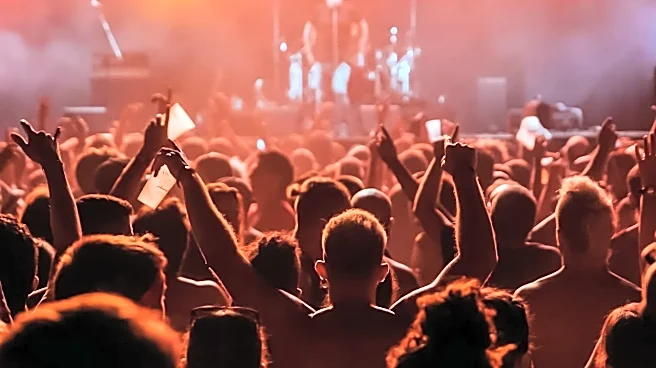
Newport’s audience is as much a part of the experience as the performers. Tickets famously sell out in minutes, often months before a single artist is announced. This means the crowd is not there for a specific headliner; they are there for the Newport experience. They are a self-selecting group of passionate music fans who come for discovery, ready to be impressed by an artist they've never heard of on a smaller stage. This creates a uniquely respectful and attentive atmosphere. You’re less likely to see seas of phones and more likely to see people genuinely listening. This dynamic creates a powerful feedback loop: artists feel the respect and give intimate, heartfelt performances in return, reinforcing the very culture the audience came to be a part of.