






The Geometry of Rebellion
The true heart of Mod style wasn't a pattern, but a silhouette. Emerging from the youth-driven culture of late 1950s and early 60s London, Mod was a deliberate break from the past. It rejected the constricted, hourglass figures of the previous generation—a
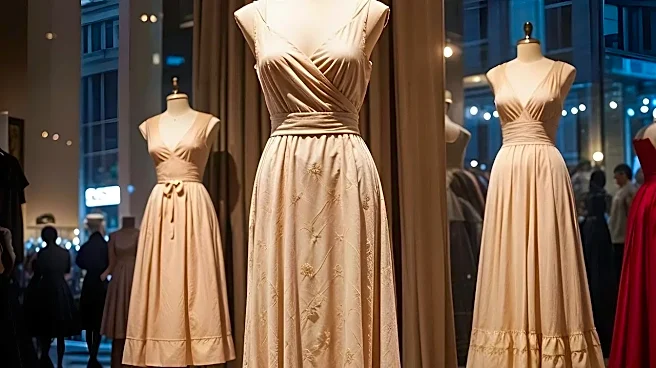
look that demanded girdles, petticoats, and complex underpinnings. Instead, pioneers like Mary Quant championed a new, architectural freedom. The shift dress and the A-line skirt became the uniform of this new era. These shapes were simple, graphic, and liberating. They hung from the shoulders, erasing the waist and creating a youthful, almost androgynous figure that was all about movement and ease. This wasn't just a change in clothing; it was a change in attitude. The clean, sharp lines were a visual representation of a forward-looking generation that was creating its own rules.
From London to the Space Age
While Quant was defining the look on London’s Carnaby Street, Parisian designers were launching it into orbit. Designers like André Courrèges and Pierre Cardin took the clean geometry of Mod and infused it with the era's obsession with the future: the Space Race. Courrèges' 1964 'Space Age' collection was a landmark, featuring stark white and silver, angular minidresses, and trouser suits. He used unconventional materials like PVC and plastics, creating structured garments that stood away from the body. His clothes were sculptural, paired with accessories like flat go-go boots, goggles, and helmets that borrowed directly from astronaut equipment. This futuristic aesthetic reinforced the core idea of Mod: that fashion was about progress, innovation, and looking forward, not back. The shapes were designed to liberate the body for a modern, active life.
So, What About the Target?
The target symbol, or RAF roundel, is undeniably linked with the Mod era, but its connection is more specific than most people realize. The symbol was first a military emblem for the Royal Air Force. Its adoption into the subculture came largely through Pop Art and music, most notably the band The Who. Keith Moon and Pete Townshend famously incorporated Pop Art visuals like the Union Jack and the roundel into their stage wear. This cemented the image of the 'Mod Target' in the public imagination. However, for the original Mods, this was more of a stylistic offshoot than a core principle. The fashion movement itself was rooted in sharp tailoring, slim-fit trousers, and those revolutionary dress shapes. The target was a symbol adopted by a faction of the movement, but the foundation of the entire style remained the silhouette.
The Enduring Legacy of the Line
While a target T-shirt is a fun throwback, the true, enduring legacy of Mod fashion is found in its shapes. The A-line skirt is a perennial classic. The shift dress remains a go-to for effortless style. Color-blocking and geometric patterns continually reappear on modern runways, referencing the optimistic and graphic energy of the 60s. Designers constantly revisit the period not for its novelty prints, but for its revolutionary approach to tailoring and silhouette. It proved that youth culture could drive the fashion industry and that radical simplicity could be more powerful than overwrought decoration. The most important thing the Mods gave us wasn't a symbol to wear on a shirt, but a new way to think about the body, freedom, and the power of a simple, clean line.