
The Primary-Color Blueprint
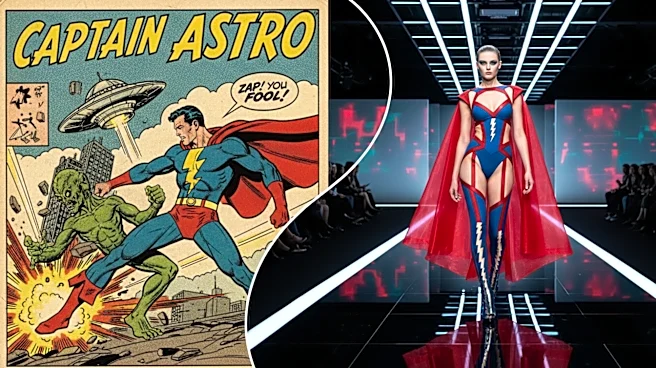
The story begins in the Golden Age of comics, the 1930s and 40s. Superheroes like Superman were designed to pop off low-quality newsprint. Their costumes were a masterclass in graphic efficiency: bold primary colors, simple lines, and instantly recognizable
emblems. Inspired by circus strongmen and pulp adventurers, these early designs weren't about realism; they were about creating an immediate visual shorthand for power, hope, and identity. The iconic "S" on Superman's chest or the stark bat symbol were more than just logos; they were the foundation of a new visual language that could be understood in a single glance, establishing a powerful blueprint that would endure for decades.
The Allure of the Ideal Form
So what makes this visual language so irresistible to high fashion? At its core, the superhero costume is an exercise in celebrating the idealized human form. It’s about creating a powerful silhouette, exaggerating anatomy, and using clothing to signal transformation. Designers are drawn to these same principles. Avant-garde creators like Thierry Mugler and Jean Paul Gaultier have long played with themes of the superhuman. Mugler’s robotic bustiers and insect-like constructions from the 90s, for instance, transform the wearer into a fantastical creature, part human, part machine, and entirely powerful—a concept straight out of a comic book panel. His work for Beyoncé's 2009 tour even took direct inspiration from the superheroine archetype, creating a warrior-goddess persona.
The Met Gala's Official Blessing
For years, the influence was a subtle undercurrent. But in 2008, the connection was made official and celebrated on fashion's biggest stage. The Metropolitan Museum of Art's Costume Institute unveiled its landmark exhibition, "Superheroes: Fashion and Fantasy." The exhibition, and its star-studded Met Gala, explicitly showcased how high fashion has repeatedly borrowed from the superhero's closet. It placed avant-garde pieces by designers like John Galliano, Alexander McQueen, and Nicolas Ghesquière for Balenciaga alongside actual film costumes, from Michelle Pfeiffer's Catwoman suit to Lynda Carter's original Wonder Woman outfit. The event acted as a coronation, formally acknowledging that the visual tropes once dismissed as juvenile were, in fact, a deep well of inspiration for fashion's most creative minds. It confirmed that the cape, mask, and bodysuit were potent metaphors for identity and transformation.
Armor, Futurism, and the Modern Runway
In the 21st century, the influence has become even more pronounced, thanks in large part to the global dominance of superhero cinema. The gritty realism and high-tech armor of modern movie costumes have provided a new aesthetic to mine. Nicolas Ghesquière, during his transformative tenure at Balenciaga, became known for his futuristic, armor-like constructions and use of innovative textiles, creating collections that felt both protective and powerful. His work often featured structured, almost robotic silhouettes that echoed the high-tech suits of characters like Iron Man. Designers like Gareth Pugh and Rick Owens have also explored darker, more architectural forms that feel kin to Batman's gritty world. This isn't just about slapping a logo on a shirt; it's about deconstructing the very idea of a superhero—power, protection, identity—and weaving it into the fabric of modern style.