

The Paradox of Choice Hits the Couch
The core of the issue is a well-documented psychological concept: the paradox of choice. The theory, popularized by psychologist Barry Schwartz, suggests that while we think we want unlimited options, having too many can lead to anxiety, indecision, and
ultimately, dissatisfaction. When you open a streaming app, you aren’t just looking at a few choices; you’re facing a digital warehouse of thousands of movies and series. Each tile represents a commitment. Is this eight-episode prestige drama really worth the 10-hour investment? What if the movie with the 92% rating is better than the one with the 88%? This pressure to optimize our leisure time creates a low-grade stress that researchers call 'decision paralysis.' Faced with an overwhelming number of choices, our brains can freeze up, making it seemingly impossible to pick anything at all.
Active Work vs. Passive Discovery
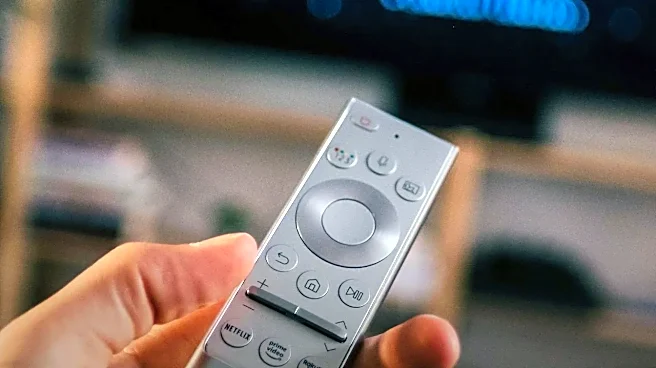
Streaming demands that you become an active participant in content curation. You are the librarian of your own entertainment, tasked with searching, filtering, and vetting options. It’s a job. Channel surfing, by contrast, is an act of passive discovery. It’s a low-stakes, linear journey where the content comes to you. The remote control required only simple, repetitive actions—up or down. There was no grand commitment. If a show didn't grab you in 15 seconds, you simply moved on without a second thought. This mindless, hypnotic quality allowed your brain to switch off. Streaming requires you to lean in and think; channel surfing gave you permission to lean back and float.
The Mental Weight of a 'Bad' Choice
With the sheer volume of acclaimed television, the fear of missing out (FOMO) has migrated to our watchlists. Picking a show to binge-watch feels like a significant decision. If you choose poorly, you've wasted valuable and limited relaxation time. This heightens the pressure to make the 'right' choice every single time. Flipping past a boring show on cable carried no such weight. It was an ephemeral moment, not a verdict on your taste or your ability to relax efficiently. The constant churn of streaming services, with users subscribing for a single show and then canceling, underscores this high-stakes environment. Consumers are constantly evaluating whether a service is worth the cost, adding a layer of financial calculation to what should be a simple leisure activity.
When Design Gets in the Way
The user experience of modern streaming is also a culprit. Every app has a different layout. Some auto-play trailers, hijacking your attention. Others present a dizzying grid of options that all blur together. This lack of uniformity across platforms adds to our cognitive load—the total amount of mental effort being used in our working memory. Hopping between Netflix, Max, and Peacock requires our brains to constantly re-learn and adapt. The old cable guide, for all its simplicity, was consistent. It was a single, straightforward grid. This simple, predictable interface reduced the mental energy needed to figure out what was on, leaving more energy for actually watching it. The 'endless scroll' on many platforms is designed to keep you engaged with the app, but it often has the opposite effect, leading to exhaustion before you’ve even pressed play.