







The Real Driving Force
The secret to making the new *Supergirl* film work isn’t a bigger villain or a more spectacular display of power. It’s a young, determined alien girl named Ruthye. In the celebrated Tom King and Bilquis Evely comic book series the film is based on, Ruthye is the story’s
narrator and true engine. After her father is murdered by a coward named Krem of the Yellow Hills, the precocious girl from a backwater planet sets out to hire a mercenary to hunt him down. The person she finds is Kara Zor-El, celebrating her 21st birthday in a cosmic dive bar, trying to drink away the trauma of a life defined by loss. Ruthye isn’t a sidekick or a damsel in distress; she is the client. She’s the one who initiates the quest, pulling a disillusioned Supergirl into a gritty, galaxy-spanning journey for vengeance. This isn't a story where Supergirl happens to meet a friend; it's a story where a determined girl hires Supergirl for a job, fundamentally changing the power dynamic we expect.
A Grittier, Wiser Kryptonian
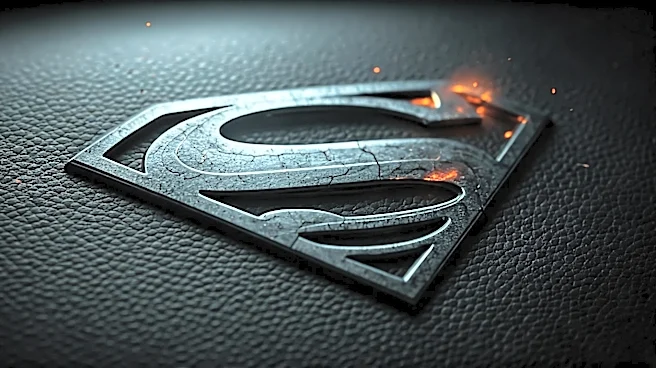
Focusing on this relationship is the single best way to deliver on James Gunn’s promise of a more complex Supergirl. For decades, Supergirl has struggled to escape Superman's shadow, often portrayed as his younger, cheerier, and slightly less powerful counterpart. The *Woman of Tomorrow* comic demolishes that perception. This Kara is jaded. She watched her entire planet die, arrived on a new one, and has spent her life being compared to a cousin she barely knows. The friendship with Ruthye forces her to confront that cynicism. Through the eyes of this vengeful-yet-hopeful child, Kara must decide what justice, mercy, and heroism actually mean to her, far from the symbolic weight of the “S” shield on Earth. She becomes a mentor, a bodyguard, and an older sister figure, but she’s also a broken person being pieced back together by the purpose Ruthye gives her. This dynamic allows for a character study that is leagues more interesting than another story about punching asteroids.
The All-Important Production Choice
Herein lies the critical production choice: the film must treat Ruthye as the co-lead. This isn't just about casting a talented young actress; it’s about structuring the entire narrative around their two-person journey. The temptation in a blockbuster film will be to sideline Ruthye, reducing her to a motivation-bot who occasionally appears to remind Supergirl what she’s fighting for. That would be a catastrophic mistake. The film needs to be a two-hander, a cosmic road trip movie in the vein of *True Grit* or *The Mandalorian*. Ruthye’s perspective, her narration, and her emotional arc are just as important as Kara’s. The chemistry between the two leads will be the bedrock of the entire film. If the audience doesn't believe in their bond—tense, funny, and ultimately profound—the whole enterprise falls apart. The production must invest as much in finding the perfect Ruthye as it did in finding its Supergirl and then give that character the screen time and narrative weight she deserves.
Escaping the Superman Shadow
By making this friendship the central plot, *Supergirl: Woman of Tomorrow* can finally achieve what so many other adaptations have failed to do: make a Supergirl story that isn't implicitly about Superman. This is not a tale of protecting Metropolis or living up to a family legacy. It's a deeply personal, character-driven space western. The stakes feel both smaller and infinitely larger because they are rooted in the emotional journey of two characters against an uncaring universe. The story becomes about their shared trauma and their quest for closure, not about how Kara’s journey measures up to Kal-El’s. It gives her a mythology that is uniquely her own, forged in the lawless frontiers of deep space alongside a girl who refused to let her grief be forgotten.