






The Classic Musical: 1776 (1972)
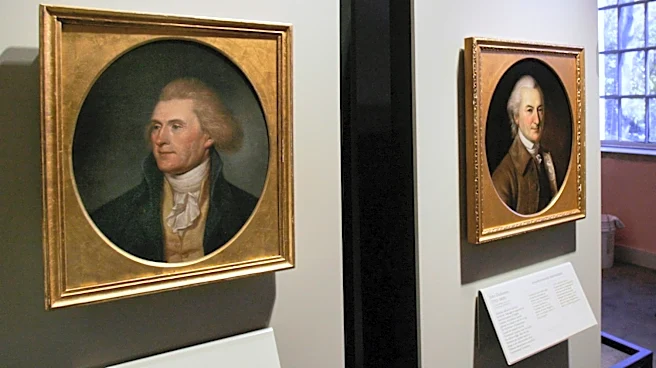
Before 'Hamilton' made history hip, there was '1776'. This charming, surprisingly witty musical turns the stuffy Continental Congress into a room full of flawed, funny, and fervent men. William Daniels' portrayal of the "obnoxious and disliked" John Adams
is iconic. While it simplifies history and sidesteps the full horror of the slavery compromise, its great strength is dramatizing the political sausage-making behind the Declaration of Independence. It’s a joyous, song-filled reminder that the founding of the nation was anything but unanimous or easy.
The Masterclass: Lincoln (2012)
This isn't a sweeping biopic; it's a procedural. Steven Spielberg focuses laser-like on the final, frantic months of Abraham Lincoln's push to pass the 13th Amendment. It’s a film about the gritty, unglamorous work of democracy—the backroom deals, the political arm-twisting, and the moral compromises required to achieve a monumental good. Anchored by Daniel Day-Lewis's legendary performance, 'Lincoln' argues that ideals are noble, but political craftsmanship is how history actually gets made. While some historians note its narrow focus on politicians over activists, it remains a powerful work of historical fiction rooted in fact.
The Cultural Phenomenon: Hamilton (2020)
You can't have this conversation without it. The Disney+ pro-shot of Lin-Manuel Miranda's masterpiece isn't just a musical; it's a cultural reset that asks who gets to tell America's story. By casting Black, Hispanic, and Asian-American performers as the founding fathers, it reframes the nation's origin story as an immigrant story. The show’s brilliance lies in using the language of modern America—hip-hop, R&B, and pop—to make 18th-century politics feel immediate and vital. It’s the ultimate conversation starter about legacy, representation, and what America is versus what it promises to be.
The Curveball Satire: Dr. Strangelove (1964)
What does a Cold War satire have to do with America's 250th? Everything. Stanley Kubrick's dark comedy is arguably the greatest film ever made about American power, paranoia, and the absurd logic of self-destruction. Released just after the Cuban Missile Crisis, the film mocks the doctrine of mutually assured destruction (MAD) by showing how easily systems built to keep the peace could lead to annihilation. It's a hilarious and horrifying look at what happens when ego, ideology, and automated technology run amok—a theme as relevant in the 21st century as it was in 1964.
The Modern Allegory: Nope (2022)
Jordan Peele's sci-fi horror is a stealthy essay on America itself. It’s a story about spectacle, exploitation, and the erasure of history. The protagonists, Black horse ranchers who are descendants of the forgotten jockey in the first motion picture, find themselves confronting a literal man-eating spectacle in the sky. The film critiques America's obsession with capturing and monetizing everything, often at a terrible human cost. It's a complex, genre-bending film that uses a UFO to explore themes of legacy, the myth of the American West, and the unseen labor that built Hollywood.
The Essential Reckoning: I Am Not Your Negro (2016)
No smart reflection on America is complete without James Baldwin. This Oscar-nominated documentary, based on Baldwin's unfinished manuscript 'Remember This House,' is a searing and essential piece of social critique. Narrated by Samuel L. Jackson, the film uses Baldwin's words to explore the history of racism in the United States through his recollections of Medgar Evers, Malcolm X, and Martin Luther King Jr. It is a powerful, unflinching examination of American identity, forcing the viewer to confront why, in Baldwin's words, the country needed to invent the concept of the 'nigger' in the first place.