



Night 1: The Foundational Slasher
Start your horror journey with the subgenre that defined a generation. Slashers are all about iconic villains, resourceful final girls, and a satisfyingly simple formula: a group of people are picked off one by one. These films are the bedrock of modern
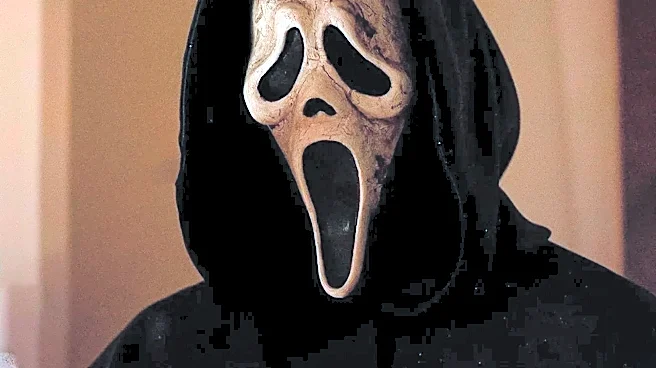
horror tropes. For the quintessential experience, you can’t go wrong with John Carpenter’s 'Halloween' (1978), the film that introduced the world to the silent, menacing Michael Myers. If you prefer a more self-aware and witty take on the formula, Wes Craven’s 'Scream' (1996) brilliantly deconstructs the genre while delivering genuine scares.
Night 2: The Supernatural Haunting
Time to lower the lights and check the closets. Supernatural horror taps into our primal fear of the unknown, dealing with ghosts, demons, and malevolent spirits that defy rational explanation. These films excel at building atmospheric dread. A modern classic like 'The Conjuring' (2013) is a masterclass in tension, based on the real-life paranormal investigations of Ed and Lorraine Warren. For a suburban haunting that feels unnervingly plausible, Tobe Hooper's 'Poltergeist' (1982) remains a terrifying exploration of what happens when a family home turns against its inhabitants.
Night 3: The Psychological Breakdown
The most terrifying monsters are often the ones that live inside our own heads. Psychological horror films do away with jump scares in favor of a slow-burning dread that makes you question reality and your own sanity. Stanley Kubrick’s 'The Shining' (1980) is the gold standard, a chilling portrait of isolation and madness in the haunted Overlook Hotel. For a more contemporary masterpiece that blends social commentary with unbearable tension, Jordan Peele’s 'Get Out' (2017) proves that the scariest things aren't ghosts, but people.
Night 4: The Found-Footage Frenzy
This subgenre aims for a gritty, unsettling realism by presenting the story through recovered video recordings. The shaky camera and unpolished look create an immersive and often claustrophobic experience. The film that launched a thousand imitators is 'The Blair Witch Project' (1999), a masterwork of minimalist terror that proves what you don't see is scarier than what you do. Another powerful entry is '[REC]' (2007), a Spanish film that traps a news crew in an apartment building during a zombie-like outbreak, delivering relentless, heart-pounding action.
Night 5: The Creature Feature Chaos
Sometimes you just want to see a fantastic monster wreak havoc. Creature features are a celebration of practical effects, monstrous design, and the simple terror of being hunted by something inhuman. Ridley Scott’s 'Alien' (1979) is a perfect film, a haunted house story set in space with one of cinema's most iconic monsters. Another John Carpenter classic, 'The Thing' (1982), elevates the genre with paranoia and spectacular body horror, as a shape-shifting alien infiltrates an Antarctic research base.
Night 6: A Descent into Folk Horror
Folk horror explores the terrifying traditions and beliefs of isolated rural communities. These films often pit modern sensibilities against ancient, pagan rituals, creating a unique and unsettling atmosphere. The quintessential example is 'The Wicker Man' (1973), where a police sergeant investigating a disappearance on a remote Scottish island uncovers a terrifying secret. For a more recent and visually stunning take, Ari Aster's 'Midsommar' (2019) lures viewers into a Swedish commune's sun-drenched festival that slowly reveals its horrifying nature.
Night 7: The Modern Masterpiece
End your challenge with a film that showcases the current state of horror, proving the genre is as vital and inventive as ever. These are the films that push boundaries and will be talked about for years to come. Ari Aster’s 'Hereditary' (2018) is a devastating examination of grief and inherited trauma that spirals into one of the most shocking final acts in recent memory. Alternatively, John Krasinski’s 'A Quiet Place' (2018) offers a high-concept creature feature that uses sound—and the lack thereof—to create almost unbearable suspense.