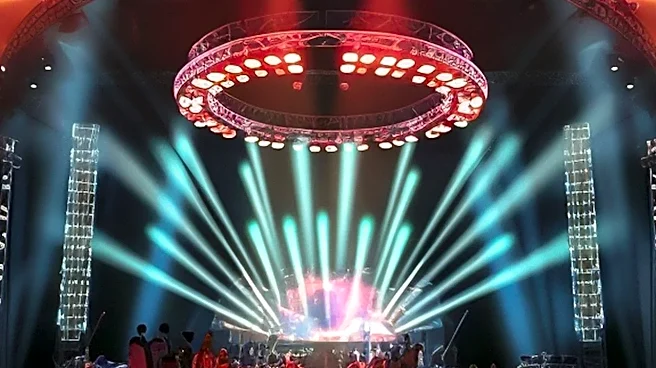






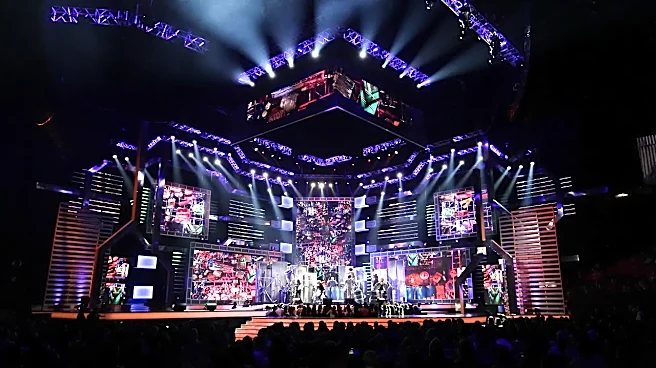

When the lights go up on the CMA Awards, viewers see a dazzling universe of video walls and pyrotechnics. But it wasn't always a high-tech spectacle. The show's journey from a simple banquet to an arena-sized production mirrors country's own evolution.
Humble Beginnings at the Auditorium
The first CMA Awards in 1967 was an industry-only banquet held at Nashville's Municipal Auditorium. It wasn't even televised. The 'stage' was minimal, likely little more than a decorated platform with a podium. The focus was entirely on the presenters and winners, not the presentation itself. When the show was first taped for broadcast in 1968 at the Ryman Auditorium, the philosophy remained simple. Production values were dictated by the limitations of television at the time: static cameras, basic lighting, and a set that served as a simple backdrop. The spectacle was the music itself, with artists like Johnny Cash and Loretta Lynn providing all the necessary star power. The goal wasn't to create a unique visual world, but to simply capture the performers for a national audience just discovering the genre.
The Opry House and the Rise of TV Moments
In 1974, the awards moved to the newly built Grand Ole Opry House, its home for the next three decades. This shift marked the beginning of stagecraft as a more considered part of the broadcast. With more space and the advent of color television, producers could start thinking more ambitiously. Sets became more elaborate, though still built from physical materials—think curtains, stairs, and band risers rather than pixels. Lighting began to play a role in creating mood. This era was defined by memorable, unscripted television moments, like Charlie Rich infamously setting fire to the winner's envelope in 1975, rather than by planned technical wizardry. The stage was a vessel for these moments, designed to honor the Opry's prestige while accommodating the growing scale of a nationally televised event.
The Arena Era and the Digital Revolution
The move to Nashville's cavernous Bridgestone Arena in 2006 was the single biggest catalyst for the show's visual transformation. Suddenly, producers had a space built for hockey games and blockbuster rock concerts. To fill that void and create an engaging television experience, the scale of the production had to explode. This coincided with rapid advances in technology. Executive Producer Robert Deaton, who has helmed the show's broadcast since 2007, brought a cinematic vision honed from years of directing music videos. Under his leadership, massive LED video screens, complex moving light rigs, and automated set pieces became standard. The modern CMA Awards stage became a dynamic, digital canvas. Production designers like Bruce Rodgers, known for his work on Super Bowl halftime shows, were brought in to create immersive environments. The stage was no longer just a platform; it was an integral part of each performance.
Total Immersion at the 2026 Awards
By the 2026 awards, the concept of a static stage has become almost obsolete. Today's production is about creating distinct, immersive 'worlds' for each of the night's 20+ performances. Each set is designed to feel like a standalone concert stop, complete with its own unique lighting, video content, and sometimes even augmented reality elements. This requires militarygrade precision from a massive crew managing multiple stages and complex changeovers during commercial breaks. The goal, as overseen by producers like Deaton, is to translate the energy of a stadium show into a broadcast that feels intimate on a TV screen. Lighting is used to create warmth during a ballad, while strobes and lasers might drive a rockinfused anthem. The stage floor itself is often a massive LED screen, extending the visual storytelling from the backdrop to the artist's feet. It's a multi million dollar technological feat that reflects country music's status as a global entertainment powerhouse.