


What Is a Directorial Signature?
In film circles, it’s what separates a director from a mere traffic cop on set. Popularized by French critics in the 1950s, the “auteur theory” posits that a director can be the true “author” of a film, imprinting their work with a distinct, recurring
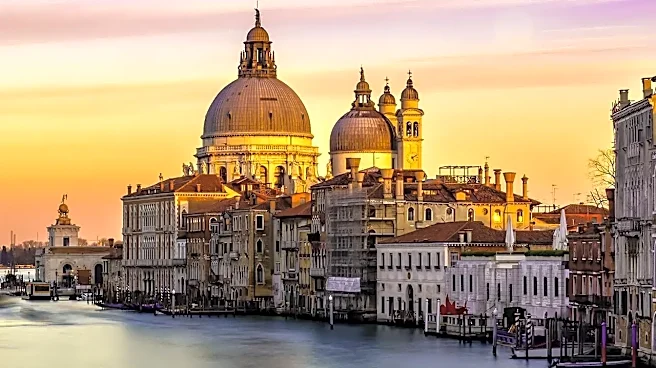
style and thematic obsessions. Think of it like a painter’s brushstroke or a novelist’s prose style. These signatures aren’t just flashy camera tricks; they are the DNA of a filmmaker’s worldview, visible across their entire body of work. At a festival like Venice, where directors are cinematic royalty, these signatures are what critics and audiences eagerly track, film after film. It’s a recurring conversation between an artist and their audience, with Venice as the annual meeting place.
Luca Guadagnino: The Aesthetics of Desire
When you see sun-drenched Italian landscapes, intimate close-ups on ripe fruit, and characters simmering with unspoken yearning, you’re likely in a Luca Guadagnino film. The Italian director, a Venice regular with films like “A Bigger Splash” and the upcoming “Queer,” is a master of sensory, atmospheric cinema. His signature lies in his exploration of desire, identity, and the lush, often decadent environments that envelop his characters. Guadagnino’s camera doesn't just observe; it practically touches, lingering on the texture of skin, food, and architecture. He pairs this visual richness with eclectic, era-spanning soundtracks and a slow-burn narrative pace that lets emotional tension build until it becomes almost unbearable. His films are character-driven, focusing on journeys of self-discovery that are as much about feeling as they are about plot.
Yorgos Lanthimos: The Deadpan Dystopian
If the dialogue is stilted and unnervingly formal, the camera is a wide-angle lens that warps the edges of the frame, and the plot revolves around a bizarre social ritual, you've entered the world of Yorgos Lanthimos. The Greek director, whose film “Poor Things” won the Golden Lion at Venice, is known for his deeply unsettling, darkly comedic style. His signature is a blend of deadpan performances, where actors deliver absurd lines with eerie sincerity, and a visual style marked by meticulous, often symmetrical compositions. Lanthimos’s films like “The Lobster” and “The Favourite” explore themes of power, conformity, and the sheer absurdity of human behavior, often set in surreal, logic-defying worlds. He creates a profound sense of discomfort that forces audiences to question societal norms, leaving narratives ambiguous and open to interpretation.
Pablo Larraín: The Fractured Historical Figure
Pablo Larraín doesn’t make traditional biopics; he creates psychological portraits that feel more like elegant horror films. The Chilean director, whose films “Spencer,” “Jackie,” and “El Conde” have all made waves at Venice, has a signature rooted in historical deconstruction. He’s less interested in timelines and facts than in the internal, often suffocating experience of his famous subjects, frequently iconic women under immense pressure. Larraín’s visual trademarks include intense, claustrophobic close-ups and a willingness to blend archival footage with his own distinct aesthetic, creating an immersive and often disorienting experience. His films serve as dark allegories, using figures like Princess Diana or Jackie Kennedy to explore national myths, power, and memory. He often uses genre conventions—satire, melodrama, horror—as a Trojan horse to deliver trenchant political and social commentary.