


The $50 Million Walk-Away
The foundational myth of Dave Chappelle’s modern career starts with an ending. In 2005, he walked away from the third season of his colossal hit, Chappelle's Show, and a staggering $50 million contract from Comedy Central. At the time, the move was largely
framed as an erratic breakdown. But as Chappelle later explained, it was an act of self-preservation against a creative and corporate machine that made him deeply uncomfortable. He felt the laughter was changing, with audiences laughing at his characters in ways he never intended. This internal conflict—between the show's success and his own artistic integrity—became the defining battle of his life. When he returned to the stage after years of relative seclusion, the story of why he left wasn't just a fun fact; it was the bedrock of his new identity. The conflict gave him his point of view: a man who had seen the top of the mountain, rejected it on principle, and came back to tell the tale on his own terms.
The Punchline as Payback
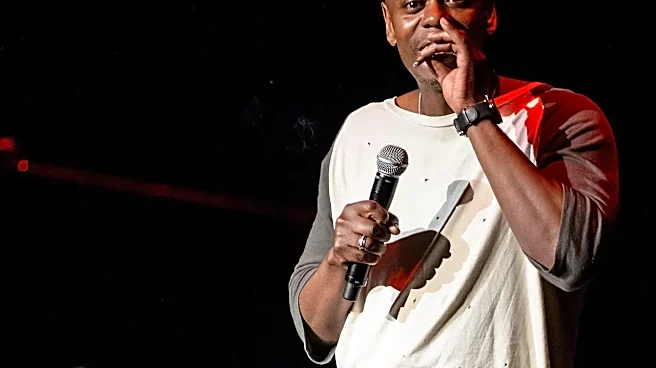
Once he re-emerged, Chappelle perfected the art of using the stage as a public square for settling scores. His Netflix specials are filled with bits that directly address his grievances, transforming private disputes into public comedy. The fallout with Comedy Central, for instance, wasn't just a backstory; it became a recurring bit about ownership and artistic rights that he masterfully wove into his act. In his special Unforgiven, released on Instagram, he laid out his entire case against ViacomCBS for licensing his show without paying him, turning a contract dispute into a compelling narrative of a man fighting a faceless corporation. This approach weaponizes comedy. The stage becomes his courtroom, where he is the prosecutor, judge, and jury. By making the audience laugh with him, he wins them over to his side of the argument, reframing public perception one punchline at a time. It's a powerful tool that allows him to control his own narrative in a way few public figures can.
Culture War as Creative Fuel
In the later stage of his career, Chappelle waded directly into the heart of the culture wars, particularly around issues of gender and the trans community. Specials like Sticks & Stones and The Closer were not just controversial; the controversy was the point. He seemed to absorb every ounce of public backlash and metabolize it directly into his next hour of material. The conflict was no longer backstage; it was a full-blown public feud with critics, activists, and even employees at Netflix. Chappelle treated the outrage as a subject worthy of interrogation, using his specials to deconstruct the anatomy of the argument itself. He argues that his job is to speak his truth, no matter how controversial, and that nothing should be off-limits to a comedian. For him, the backlash isn't a signal to stop; it's a signal that he's hit a nerve worth exploring. The societal conflict provides the raw material, and the stand-up special becomes the finished product.
The Audience as the Final Scene Partner
Ultimately, the most consistent conflict in Chappelle's work is with the audience itself. He doesn’t just perform for them; he challenges them, provokes them, and sometimes seems to be in direct opposition to them. He sees himself in the tradition of comedians like Richard Pryor, who knew they were doing something right when people got angry. In his specials, he masterfully builds tension, says the thing you're not supposed to say, and then finds a release valve that unifies the room in laughter. This process is inherently confrontational. He is testing the limits of what a crowd is willing to accept and, in doing so, exploring the very nature of offense, humor, and empathy. For Chappelle, a joke isn't just an observation delivered to a passive crowd. It's an active dialogue, a push and pull, and a shared experience forged in the uncomfortable space between harmony and conflict.