
The Original Sin: Friends Over Professionals
From the very beginning, Kevin Smith’s approach to filmmaking was a feature, not a bug. To get his 1994 breakout hit Clerks made, he maxed out credit cards and cast his New Jersey buddies in key roles.
This wasn't a high-concept artistic statement; it was a necessity. But it established a pattern that would become his trademark. Instead of auditioning a parade of professional actors, he populated his View Askewniverse with people he knew and trusted. For studio executives, whose entire business model relies on risk mitigation through marketable stars, this was professional heresy. Their world is one of carefully curated lists and pre-approved talent. Smith’s world was based on whether you hung out at the same comic book shop. As he once put it, "There was never any down side to casting friends over professionals." This fundamental difference in philosophy is the root of all confusion.
The Affleck and Damon Gamble
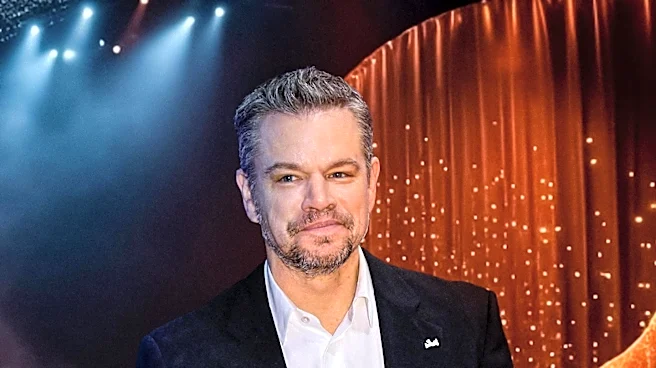
Before they were Oscar-winning A-listers, Ben Affleck and Matt Damon were just two aspiring actors, and Kevin Smith was one of their earliest champions. Smith cast Affleck in Mallrats and then gave him the lead in 1997's Chasing Amy, a role he wrote for him. The studio, Miramax, pushed back, suggesting they'd fund a bigger budget if he cast established names like Jon Stewart and Drew Barrymore. But Smith held his ground, taking a smaller budget to keep his chosen actors. This paid off, creating a career-defining role for Affleck and one of the most beloved indie films of the decade. The studio saw unknown variables; Smith saw talent and loyalty. When it came to Dogma, Smith once again tapped Affleck and Damon, whose careers had since exploded thanks to Good Will Hunting, bringing a new level of star power to Smith’s quirky, personal universe.
Against-Type and Against the Grain
If casting friends was confusing, Smith’s other choices were downright surreal to the suits. For his controversial 1999 satire Dogma, the casting was a collection of head-scratchers for any risk-averse executive. He cast Chris Rock, then known primarily for stand-up, as a forgotten 13th apostle. He gave a pivotal role to George Carlin, a comedian famously critical of organized religion, as a Catholic Cardinal. But the ultimate move was casting Canadian singer-songwriter Alanis Morissette as God. Smith had originally offered Morissette the lead role of Bethany, which she turned down. When she later expressed interest in being in the film, the only role left was the Almighty. For Smith, her "Zen Buddhist serenity" made her perfect. For a studio, casting a non-actor pop star in such a crucial, dialogue-free role was a bizarre gamble. But like many of Smith's choices, it became an iconic and unforgettable part of the film.
A Family and Friends Business
As Smith's career continued, his circle of collaborators grew, but the principle remained the same. His wife, Jennifer Schwalbach Smith, became a recurring presence. His daughter, Harley Quinn Smith, grew up on his film sets and eventually became a star in his later movies like Tusk and Yoga Hosers. The View Askewniverse is populated with a recurring troupe that goes far beyond Affleck and Damon, including Jason Lee, Jason Mewes, Brian O'Halloran, and producer Scott Mosier. Each new film became a reunion. This created a uniquely cohesive and personal cinematic world, one that felt lived-in because, for the people on screen, it was. While studios chased the next big thing, Smith was busy building a durable cinematic family, proving that his definition of a 'bankable star' was simply someone he could count on.