





The Case for 'Good Homework'
Let’s be clear: when we say a movie feels like “good homework,” we aren't talking about tedious, joyless work. We’re talking about the kind of assignment that sticks with you, the one that makes you lean forward, take notes, and connect the dots. These
films—think “Dune,” “Blade Runner 2049,” or Nolan’s own “Oppenheimer”—don’t just entertain; they demand your full attention. They offer dense worlds, complex characters, and ambiguous morals, trusting the audience to keep up. In return for your focus, they deliver a richness and satisfaction that simpler fare cannot. The reward isn't just watching a story, but deciphering it. It’s the feeling of wrestling with a challenging idea and coming away smarter, more engaged, and with a definite opinion you're ready to debate.
A Hero More Complicated Than You Remember
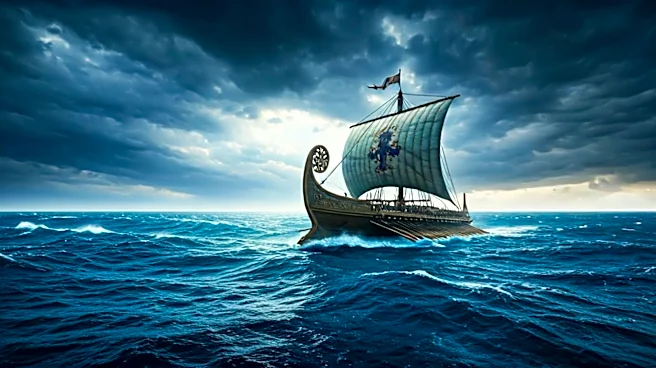
The version of Odysseus many of us remember from school is a clever hero who just wants to get home. But the man in Homer’s text is far more interesting. He’s a traumatized veteran, a gifted liar, and a man whose arrogance can be as destructive as any monster he faces. For years, big-budget movies have sanded down the rough edges of their heroes. A modern adaptation has the chance to present Odysseus in all his complex glory: a man who is heroic but also deeply flawed, someone who makes mistakes we can understand even as we question them. Christopher Nolan specifically cast Matt Damon for his ability to make an audience follow a character through their mistakes without judgment. This film doesn't have to give us a simple hero to root for; it can give us a complicated man to try and understand.
Navigating the Cyclops of Adaptation
Adapting The Odyssey is notoriously difficult. The story is an episodic travelogue filled with divine intervention, talking sirens, and a protagonist who spends years telling his story in flashback. It’s the kind of non-linear, multi-layered narrative that could easily sink a conventional blockbuster. For Christopher Nolan, however, this narrative complexity is familiar territory. A director who built his career on playing with time and perspective in films like “Memento” and “Inception” is uniquely suited to translate Homer’s sprawling structure to the screen. Nolan, who called the story “foundational,” sees its lack of a major modern adaptation as an “odd gap in movie history.” Armed with a massive budget, a commitment to practical effects, and the expansive canvas of IMAX, he is tackling what he calls the largest and most challenging production of his career to bring the mythic and human elements of the story to life.
Are We Ready to Be Challenged?
For the better part of two decades, the box office has been dominated by a certain kind of franchise filmmaking. While often successful, it has led to a sense of formula and fatigue for some viewers. But signs are pointing to a shift in audience appetite. The massive success of “Oppenheimer”—a three-hour, R-rated biopic about quantum physics and political maneuvering—proved that audiences will show up in droves for dense, adult-oriented storytelling. It grossed nearly a billion dollars by treating moviegoers like they were smart. Nolan’s “The Odyssey,” set for release in July 2026, feels like the next logical step in this evolution. It’s a bet that audiences are not just willing, but eager, to trade cinematic fast food for a complex, nourishing, and epic meal.