




The Basic Blueprint of Fabric
Before we get to the bias, let's talk about how most woven fabric is made. Think of it like a tiny, tight grid. You have one set of threads running lengthwise, called the 'warp,' which are held under tension on a loom. Then you have another set of threads,
the 'weft,' that weave over and under the warp threads from side to side. These two directions—lengthwise and crosswise—are known as the 'grain' or 'straight grain' of the fabric. When you pull on the fabric along these straight grains, you’re pulling directly on these tightly interlaced threads. They have very little room to move, which is why the fabric feels stable and has almost no stretch in these directions. This stability is perfect for structured garments like trousers or tailored jackets.
Introducing the 45-Degree Angle
Now, imagine turning that fabric grid 45 degrees. That diagonal line is what sewers and designers call the 'true bias'. Cutting fabric along this line fundamentally changes its behavior. Instead of pulling directly against a straight line of threads, you are now applying force at an angle to the entire grid. This seemingly simple change from cutting parallel to the threads to cutting diagonally across them is what unlocks the fabric's hidden potential for stretch and movement. While any diagonal cut is technically on the bias, the 45-degree angle is where the fabric achieves its maximum elasticity.
The Science of the Stretch
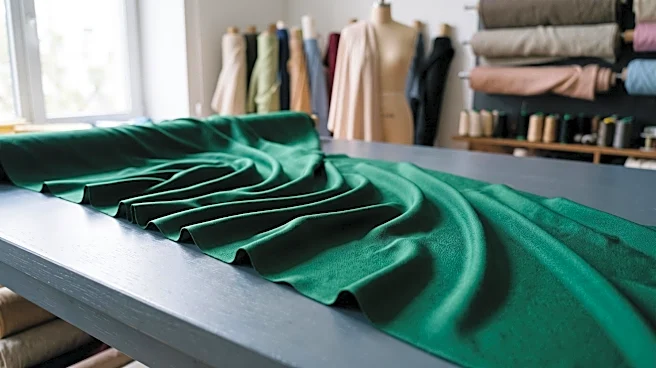
So, why does this diagonal cut create stretch? It’s a matter of physics and geometry. When you pull on bias-cut fabric, the force isn't locking the threads in place. Instead, it’s encouraging the individual warp and weft threads to shift and slide past each other at their intersections. Think of a chain-link fence or a flexible garden lattice. When you pull it straight from top to bottom, it's rigid. But if you pull it from opposite diagonal corners, the whole structure easily elongates and narrows. The woven grid of the fabric acts in the exact same way. The threads themselves aren't stretching; the space between them is changing, allowing the entire piece of fabric to conform, drape, and move in a fluid way that straight-grain fabric simply cannot.
From Physics to High Fashion
This unique property wasn't just a discovery for home sewers; it revolutionized fashion. In the 1920s and '30s, French designer Madeleine Vionnet became famous for her pioneering use of the bias cut. She realized that by cutting fabric this way, she could create gowns that moved with the body, clinging to curves and flowing like liquid without the need for restrictive corsets or complex darts. Vionnet's designs, particularly her silk and satin evening gowns, defined an era of elegance and sensuality that celebrated the natural female form. Today, her influence is seen in everything from the classic slip dress to modern red carpet looks, all thanks to her mastery of this simple yet transformative technique. The bias cut allows the garment to work with the body, not against it, creating a silhouette that is both comfortable and effortlessly chic.