





It’s About Cinema, Not Just Celebrity
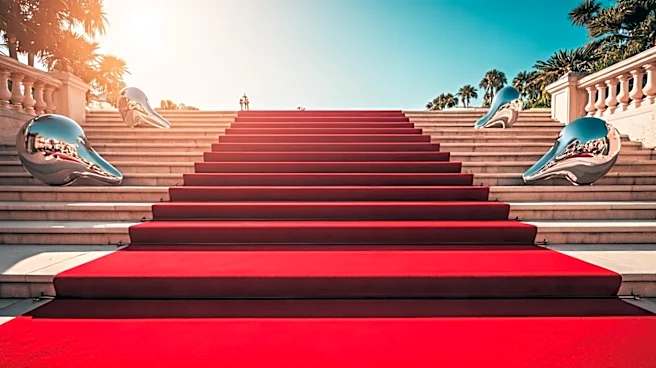
To understand the clothes, you have to understand the festival’s DNA. Unlike the Met Gala, which is a pure costume party, or the Oscars, which is a televised awards show, Cannes is fundamentally a film market and a juried competition. It’s built around the sanctity of 'le cinéma.' Directors are revered, 10-minute standing ovations are standard, and the entire affair is steeped in a reverence for film as a high art form. This context changes everything. The stars who walk the iconic red steps of the Palais des Festivals are not just attending a party; they are presenting a piece of art to a discerning, international audience. The fashion, in turn, reflects this seriousness. The goal isn't to generate a meme or land on a worst-dressed list for shock
value. The goal is to project elegance, respect, and a timelessness that befits the occasion. It’s less about 'look at me' and more about 'look at what we’ve created.'
The Ghost of Grace Kelly
You can’t separate Cannes from its location. The French Riviera isn't just a backdrop; it’s a co-star. The festival’s history is woven into the mystique of the Côte d'Azur, a playground for the global elite since the 1920s. This is where Grace Kelly, attending the festival in 1955, met Prince Rainier of Monaco, sealing her transition from Hollywood royalty to actual royalty. It’s where Brigitte Bardot established the very archetype of the carefree, glamorous starlet on the beaches of Saint-Tropez. That legacy hangs in the air. When modern stars like Anya Taylor-Joy or Cate Blanchett arrive, they are stepping onto a historical stage. The sun-drenched daytime photo calls and the dramatic evening premieres demand a wardrobe that lives up to this mythology. The crisp whites, nautical stripes, and flowing gowns aren't just clothes; they're a nod to a half-century of European seaside glamour. You can’t wear a novelty hamburger dress to a place where cinematic history was made.
The Unspoken (and Spoken) Rules
Cannes has rules, both explicit and implicit, that other events lack. For evening gala premieres, a black-tie dress code is strictly enforced for all attendees, not just the A-listers. For years, women were unofficially required to wear heels, a controversial 'rule' that highlighted the festival's commitment to a specific brand of formal presentation. Beyond the written guidelines, there’s an overwhelming pressure to deliver pure, unadulterated fashion. This is the Super Bowl for European luxury houses. Brands like Chanel, Dior, and Saint Laurent use the festival as their ultimate showcase, and official partners like the jeweler Chopard ensure that every star is dripping in millions of dollars' worth of high jewelry. This ecosystem of old-world luxury crowds out the quirky, experimental, or D-list looks common elsewhere. The result is a curated, high-stakes performance of glamour that feels almost impossibly polished. It’s a closed loop of prestige: the festival needs the stars, the stars need the designers, and the designers need the festival’s unimpeachable aura of class.
Why It's Not the Oscars
The Academy Awards red carpet often feels like a corporate affair. Stars are dressed by brands they have contracts with, delivering safe, if beautiful, looks designed to please a massive American television audience. There’s a certain homogeneity to it. The Met Gala, by contrast, is a carnival of avant-garde expression, where the point is to interpret a theme as wildly as possible. Cannes operates in a perfect middle ground. It has more personality and fashion-forward credibility than the Oscars but avoids the costume-party chaos of the Met. It is, purely and simply, a celebration of looking like a Movie Star with a capital 'M' and 'S'. It’s about embodying an ideal—poised, sophisticated, and breathtakingly beautiful. The performance isn’t about being relatable or shocking; it’s about being aspirational. It’s a two-week-long illusion where everyone tacitly agrees to pretend that the golden age of Hollywood never really ended.