






Your Brain's Ancient Alarm System
At its core, stage fright is a biological miscalculation. Your brain’s amygdala, the ancient alarm system responsible for detecting threats, can't tell the difference between a predator and a sea of expectant faces. It floods your body with adrenaline
and cortisol, triggering the “fight-or-flight” response. This is why you experience a racing heart, sweaty palms, shallow breathing, and trembling hands. It’s a primitive survival mechanism designed to prepare you for intense physical action, which is profoundly unhelpful when you need to deliver a nuanced speech or play a delicate melody. That feeling of being overwhelmed isn't a sign of weakness; it's your body preparing for a danger that exists only in your mind.
The Mind's Negative Storyteller
While your body is panicking, your mind is often making things worse by telling you catastrophic stories. Psychologists call these cognitive distortions. You might engage in “fortune-telling,” where you're convinced you will fail, or “mind-reading,” where you assume everyone is judging you harshly. This internal monologue fuels the physiological fear, creating a vicious cycle. You feel the physical symptoms of anxiety, interpret them as proof that you're about to fail, which in turn makes the physical symptoms even more intense. This fear of judgment and failure is a primary driver of performance anxiety, making you focus on everything that could go wrong instead of the task at hand.
Rewiring the Anxious Brain
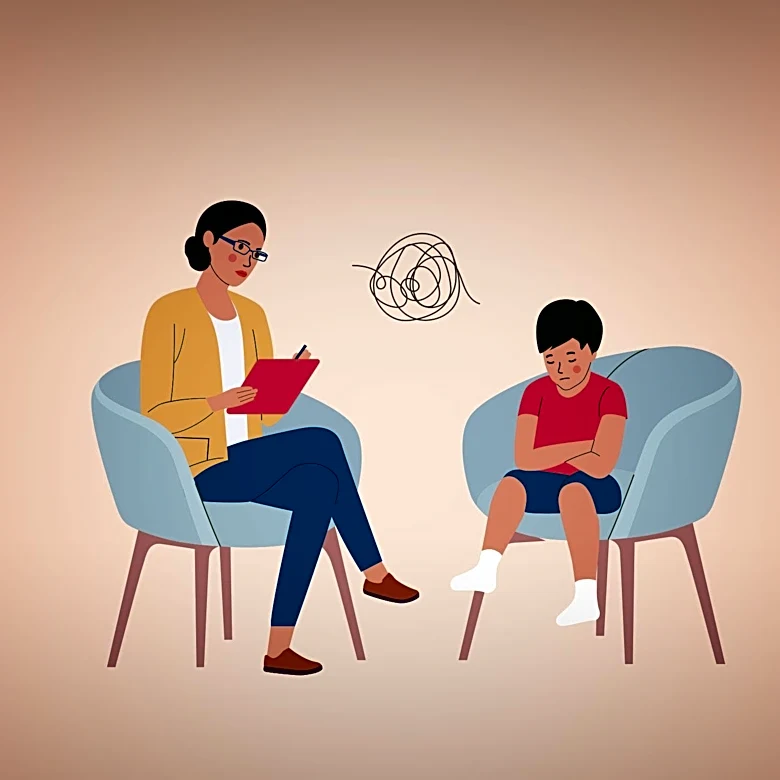
The good news is that you can retrain your brain. A cornerstone of performance psychology is cognitive-behavioral therapy (CBT), which focuses on identifying and challenging these negative thought patterns. One of the most effective techniques is cognitive reframing. Instead of telling yourself, “I’m so nervous,” you can reframe the feeling as, “I’m excited.” Research shows that reinterpreting anxiety as excitement can improve performance. Another key strategy is mindfulness and grounding. Simple deep-breathing exercises, like box breathing, can calm your nervous system and counteract the fight-or-flight response. Grounding techniques, such as focusing on the feeling of your feet on the floor or naming five things you can see, pull your attention back to the present moment and away from anxious thoughts.
The Power of Preparation and Ritual
You can’t control the audience, but you can control your preparation. Rigorous practice doesn't just build skill; it builds confidence and makes the performance feel more like a familiar rehearsal. Many elite performers, from actors to athletes, rely on pre-show rituals to create a sense of predictability and calm. This could be anything from a specific warm-up routine to listening to a particular song. The ritual itself isn't magic; its power lies in providing a sense of control in a high-stakes environment. Furthermore, gradual exposure—practicing in front of a trusted friend, then a small group, before facing a large crowd—can desensitize you to the fear over time, teaching your brain that the situation isn't actually a threat.