





What’s scarier: a masked killer with an axe, or a family dinner gone terribly wrong? Eli Roth’s 'Thanksgiving' serves up gory fun, but Trey Edward Shults’ indie drama 'Krisha' argues that true horror isn’t what’s chasing you—it’s what’s inside.
The Familiar Thrills of a Holiday Slasher
Eli Roth
is a master of a certain kind of horror. His film 'Thanksgiving' is a gleeful, gory romp that delivers exactly what it promises: a pilgrim-masked killer terrorizing a Massachusetts town as revenge for a deadly Black Friday riot. It's a classic slasher, built on a foundation of creative kills, jump scares, and a satisfying whodunit mystery. The horror is external and obvious. A clear monster, John Carver, stalks his victims, and the audience's fear is rooted in the anticipation of his next bloody act. The film is effective, fun, and designed for a crowd that loves the adrenaline spike of watching teens get chased through the woods. It’s a spectacle of violence, where the fear dissipates almost as quickly as the credits roll.
An Invitation to a Different Thanksgiving
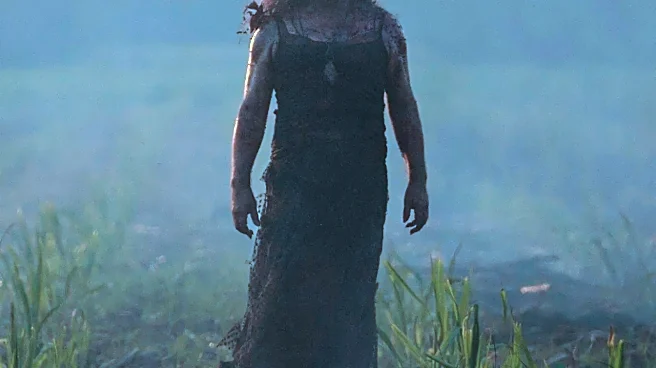
Then there’s 'Krisha'. Released in 2015, this film shares a holiday setting but little else. It’s not a horror movie by genre definition; it’s a psychological drama. The story follows Krisha, a woman in her sixties and a recovering addict, as she returns to her estranged family for Thanksgiving dinner after a decade-long absence. She volunteers to cook the turkey, a monumental task that becomes a symbol for her desperate attempt to prove she’s changed, that she can be trusted again, and that she can reclaim her place in the family that her addiction forced her to abandon. There are no masked killers here. There’s just a house full of simmering resentment, unspoken history, and fragile hope.
Horror from the Inside Out
The terror in 'Krisha' isn't about an external threat; it's about internal collapse. Director Trey Edward Shults, who based the film on his own family's experiences with addiction, uses every cinematic tool to place us directly inside Krisha’s fracturing psyche. The camera work is disorienting, often sticking close to Krisha's face or swirling around her as the overlapping sounds of a chaotic family gathering become an unbearable cacophony. The score is less a melody and more a collection of anxious, percussive noises that mirror her escalating panic. We watch as the cautious optimism of her family curdles into wary suspicion, and her own resolve begins to crumble under the weight of her past. The monster isn't a man in a pilgrim mask; it’s the disease of addiction, the crushing weight of regret, and the fear of being unforgivable.
The Terror of the Terribly Real
This is where 'Krisha' becomes scarier than any slasher. While 'Thanksgiving' presents a villain we can comfortably distance ourselves from, 'Krisha' offers a horror that feels terrifyingly plausible. The fear in a slasher film is about what a killer might do to you. The fear in 'Krisha' is about what you might do to yourself and the people you love. It taps into universal anxieties: What if I can’t fix the mistakes I’ve made? What if the people I need forgiveness from can never give it? What if I lose control and destroy the one good thing I have left? The climactic scene in 'Thanksgiving' is a violent showdown. The climax in 'Krisha' involves a dropped turkey, a moment that signifies the complete and utter collapse of her carefully constructed sobriety and a final, heartbreaking severing of family ties. One is a burst of bloody catharsis; the other is a quiet, devastating implosion that feels infinitely more personal and haunting.