





The Secret Language of the Lapel Roll
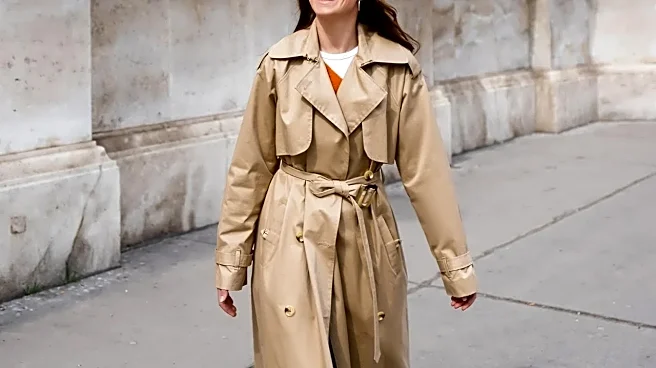
First, let’s talk about the lapel. On a standard, mass-market coat, the lapel is often pressed completely flat, creating a sharp, lifeless crease where it folds. A high-quality coat, however, features a “lapel roll.” This is the gentle, three-dimensional
curve as the lapel arches from the collar down towards the top button. It doesn’t lie flat against your chest; it has body and life, creating a graceful curve that machine-made, fused lapels simply cannot replicate. This subtle roll is a clear signal of superior internal construction. It indicates that the lapel has been hand-stitched to the underlying canvas, allowing it to have this soft, deliberate shape. It's a detail that exudes refinement and is a primary indicator of a bespoke or high-end garment.
Beneath the Surface: Understanding Canvas
So, what is this “canvas” the lapel rolls over? Think of it as the soul of the coat. Sandwiched between the outer fabric and the inner lining, the canvas is a layer, traditionally made from horsehair and wool, that gives the jacket its structure and shape. There are three main types of construction. Fused construction, found in most fast-fashion and entry-level coats, uses glue to stick the layers together. This method is cheap and easy, but the glue can break down over time, causing bubbling and stiffness. A half-canvassed jacket has this structural layer in the chest and lapels, offering better shape where it matters most. The gold standard is a full-canvas construction, where the layer runs the entire length of the coat front. This allows the garment to drape beautifully and, more importantly, mold to the wearer’s body over time, becoming more comfortable with every wear. A canvassed construction is what allows for that beautiful lapel roll and is a hallmark of quality craftsmanship.
The Art of a Perfectly Balanced Hem
Now, look at how the coat hangs. “Balance” is a crucial principle in tailoring that refers to how a garment hangs on the body. For our purposes, let’s focus on the hem. When you look at a well-balanced coat from the side, the hem should be perfectly parallel to the ground, or the front might be just a fraction longer than the back to accommodate the chest. What you don't want to see is the back hanging significantly lower or the front hiking up, which can happen with poor posture accommodation or sloppy patternmaking. From the front, the left and right sides of the hem should also hang evenly. An unbalanced hem, where one side dips or the whole thing seems to twist, is a sign of a pattern that hasn’t been properly drafted for the human body. Perfect balance is what gives a coat that look of effortless elegance, appearing as if it was made to move with the wearer.
The Copenhagen Connection
These three elements—lapel roll, canvas, and hem balance—are the building blocks of the coats that define Copenhagen style. The Scandi aesthetic is often mistaken for simple minimalism, but it’s more accurately described as a devotion to functional, high-quality, and timeless pieces. The city’s style set gravitates towards outerwear that is built to last, favoring neutral-colored wool coats with impeccable, often-oversized tailoring. They appreciate luxury that whispers rather than shouts. The beauty is in the details you feel rather than see: the substantial weight of the wool, the smooth drape of the canvassed front, and the way a perfectly balanced coat moves with you. It’s an investment in quiet confidence, which is the true essence of Scandinavian cool.