




The Wide-Angle Stretch
One of the primary tools for making a space feel longer and more distorted is a wide-angle lens. These lenses, which have a short focal length (typically under 35mm), capture a much broader field of view than the human eye. In doing so, they exaggerate
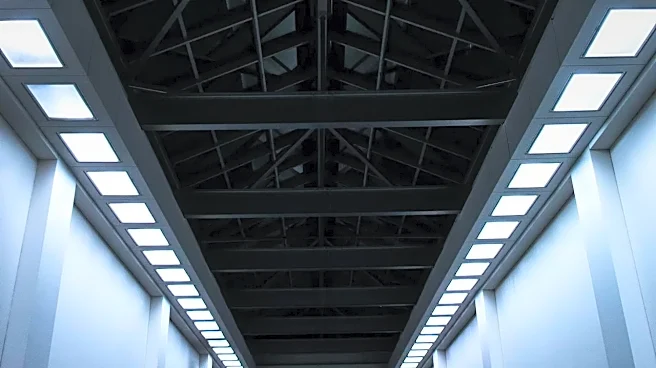
the perceived distance between objects, making foreground elements seem larger and background elements appear much farther away. When a camera is placed at one end of a hallway and shot with a wide-angle lens, the walls appear to stretch away from the viewer, making the corridor seem unnaturally long and cavernous. This distortion can create a feeling of isolation and paranoia, as seen in Stanley Kubrick's "The Shining," where the vast, empty hotel hallways become characters in themselves, amplifying the psychological horror. The lens makes the space feel both immense and inescapable.
The Telephoto Squeeze
On the opposite end of the spectrum is the telephoto lens, which has a long focal length (typically 85mm or more). Instead of stretching space, a telephoto lens creates an effect called "lens compression," where the foreground and background appear squashed together. Distant objects seem much closer and larger than they are in reality. This is the technique behind the famous shot in "The Graduate" where Dustin Hoffman is running toward the camera but seems to make no progress; the background is compressed, making his frantic sprint feel futile. In a hallway, this effect can be deeply unsettling. It makes the end of the hall feel claustrophobically close, and any threat approaching from a distance will appear to loom larger, faster. The compression flattens the sense of depth, creating a dense, stacked visual that can heighten tension and a feeling of being trapped.
The 'Vertigo' Effect
Perhaps the most psychologically jarring technique is the "dolly zoom," also known as the "Vertigo effect" after its famous use in Alfred Hitchcock's 1958 film. This shot combines camera movement with a lens adjustment to create a truly disorienting experience. To achieve it, the camera physically moves toward or away from a subject on a track (a dolly), while the lens simultaneously zooms in the opposite direction. The result is that the subject in the center of the frame stays the same size, but the background appears to warp—either rushing forward or stretching away dramatically. When used in a hallway, it can visually represent a character's internal state of panic, dizziness, or a sudden, terrifying realization. It's the ultimate visual expression of the world itself feeling unstable, making the environment feel as dangerous as any physical threat.
The Psychology of Space
These lens choices aren't just technical tricks; they tap into our fundamental psychology of space. Humans intuitively feel a certain way in different environments. Long, narrow spaces can trigger a sense of unease or claustrophobia, while vast, empty ones can feel isolating. Filmmakers use lenses to weaponize these architectural feelings. A wide-angle lens exaggerates the emptiness and creates leading lines that pull our eyes toward a vanishing point, building suspense about what lies at the end. Telephoto compression eliminates the safe buffer of distance, making threats feel imminent. The dolly zoom distorts our very sense of spatial reality. By understanding how we perceive depth, distance, and safety, a director can turn a simple hallway into a powerful tool for storytelling, proving that the way we see the world is just as important as what we are looking at.