






1. It Has the Most Games
Let’s start with the most important metric: volume. Dallas (specifically, AT&T Stadium in Arlington) was awarded nine matches for the 2026 World Cup, the most of any host city. While MetLife Stadium in New Jersey secured the coveted final, Dallas will
host a semi-final, arguably the second-biggest prize. Hosting more games than anyone else—including five group stage matches—cements North Texas as the tournament's center of gravity. For a full month, the world’s soccer attention will repeatedly pivot back to this one region. More games mean more fans, more media, and more economic impact, making Dallas the busiest and most consistently relevant hub of the entire tournament.
2. The Billion-Dollar Soccer Palace
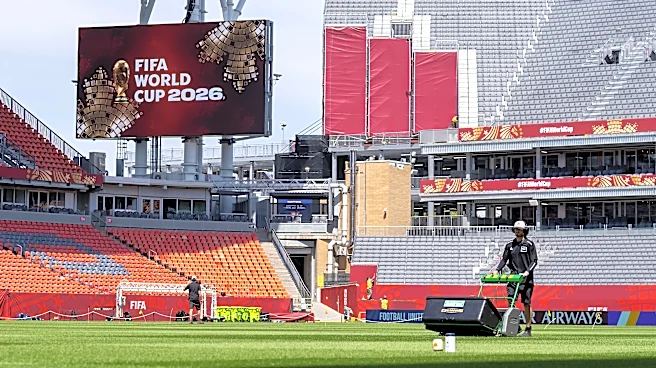
AT&T Stadium isn't just a venue; it's a self-contained universe of sport. Nicknamed "The Death Star" or "Jerry World," it was built for spectacle. With a climate-controlled indoor environment, it completely neutralizes the risk of scorching Texas summer heat or a sudden thunderstorm—a massive advantage for FIFA, which prioritizes broadcast certainty. Its official capacity of 80,000 can be expanded to over 100,000, promising record-breaking attendance. Furthermore, the stadium's vast network of luxury suites and premium clubs is designed to cater to FIFA's corporate partners and VIPs on a scale few other venues can match. FIFA had to ask for some modifications—namely, converting the artificial turf to natural grass and slightly widening the field—but these are minor logistical hurdles for a venue of this scale.
3. A True Geographic Hub
The 2026 World Cup is a logistical behemoth, spread across three countries and four time zones. Dallas’s location is a massive strategic advantage. Situated in the Central Time Zone, it's an equidistant and relatively easy flight from other host cities in Mexico (Monterrey, Guadalajara), the West Coast (LA, Seattle), and the East Coast (New York, Miami). Dallas/Fort Worth International Airport (DFW) is one of the world's busiest, offering unparalleled connectivity for the thousands of fans, teams, and media personnel who will be crisscrossing the continent. For teams looking for a central base camp or fans planning to follow their country across multiple venues, Dallas presents itself as the most logical and convenient anchor point.
4. A Proven Big-Event Track Record
Hosting a World Cup semi-final isn't a job for amateurs. A city needs proven experience in managing massive crowds, complex security, and global media. Dallas has that in spades. The region has successfully hosted a Super Bowl, an NBA All-Star Game, a College Football Playoff National Championship, and major international soccer matches featuring clubs like Real Madrid and Barcelona. This isn't its first rodeo. The local organizing committee, law enforcement, and hospitality infrastructure have been tested under the brightest lights and have demonstrated the competence needed to pull off an event of this magnitude without a hitch. FIFA values reliability, and Dallas's resume is impeccable.
5. A Growing Soccer Capital
This isn't just a business transaction for Dallas; it's a cultural moment. While Texas is famous for its love of a different kind of football, North Texas has a deep and growing passion for soccer. It's home to FC Dallas, a founding MLS club with a renowned youth academy. The region has a massive and diverse international population, particularly from Mexico and Central America, where soccer is king. The fan fests and public viewing areas are expected to be enormous and electric. Unlike in some cities where the World Cup might feel like just another event, in Dallas it will feel like a month-long festival, tapping into a pre-existing and authentic local passion for the beautiful game.