




The Spark in the South Korea Match
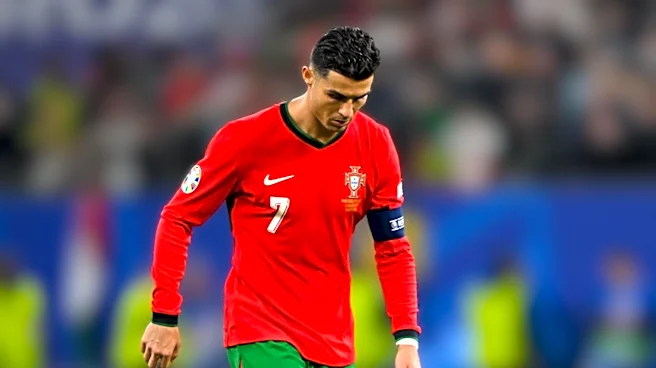
The drama didn't begin with the benching, but days earlier, in the 65th minute of Portugal's final group stage match against South Korea. Coach Fernando Santos decided to substitute his captain, Cristiano Ronaldo. Visibly frustrated, Ronaldo gestured
and muttered as he walked off the pitch. While Ronaldo later claimed his anger was directed at a Korean player who was rushing him, the optics were poor. The images circulated globally, and back in Portugal, they were impossible to ignore. Santos, a typically stoic figure, faced the media and made his feelings clear. "Have I seen the images? Yes. I didn't like it. Not at all," he stated, adding that the issue would be resolved internally. It was a rare public rebuke of his superstar, and it set the stage for what was to come.
A Gamble for the Ages
When the starting lineup for the Round of 16 match against Switzerland was announced, the unthinkable was confirmed: Ronaldo was not in it. For the first time since 2006, he would not be starting a World Cup match for his country. The decision sent shockwaves through the football world. Santos opted to start 21-year-old Benfica forward Gonçalo Ramos, a player with only a handful of international appearances to his name. It was a monumental gamble. Bypassing a living legend and the nation's all-time leading scorer in favor of an untested youngster on the world's biggest stage was a move that could either define a new era or end a manager's career. While Santos described the decision as purely tactical, few could separate it from the disciplinary undertones of the South Korea incident. The world watched, waiting to see if the coach's nerve would hold.
The Vindication and the Hat-Trick
Any debate over Santos's decision was silenced with astonishing speed. Just 17 minutes into the match, Gonçalo Ramos received the ball and fired a blistering shot into the top corner of the net for his first international goal. It was just the beginning. As Portugal dismantled a capable Swiss side, Ramos was at the center of it all. He scored a second goal with a poacher's finish and completed a stunning hat-trick with a delicate chip over the goalkeeper. Portugal won 6-1 in their most dominant performance of the tournament, and the narrative was flipped on its head. The team looked liberated, fluid, and dynamic. The gamble had not just paid off; it had been vindicated in the most spectacular fashion imaginable. On the sideline, Ronaldo, who came on as a late substitute, could only watch as his replacement delivered one of the great breakout performances in World Cup history.
The Aftermath and the End of a Dream
The triumph against Switzerland created a complex new reality. Ramos was now the man in form, and Santos stuck with him for the quarter-final against Morocco. Ronaldo once again started on the bench. This time, however, there would be no fluid attacking masterclass. Against Morocco's disciplined and history-making defense, Portugal struggled to create chances. Ronaldo was brought on early in the second half as his team chased the game, but he couldn't conjure a miracle. Portugal lost 1-0, crashing out of the tournament. Ronaldo left the field in tears, a devastating end to what was almost certainly his final World Cup. The fallout was swift. Days later, the Portuguese Football Federation announced it had parted ways with Fernando Santos, ending his successful eight-year reign that included the Euro 2016 trophy.