





The Myth: A Writers' Room Rebellion
The rumor mill paints a dramatic picture: a team of brilliant but fed-up writers, unable to stomach another controversial joke, decides to walk away from one of Dave Chappelle’s blockbuster Netflix specials. It’s an easy story to believe. Given Chappelle's
willingness to tackle sensitive subjects, which has led to public criticism and even employee walkouts at Netflix and reported boycotts at SNL, the idea of a creative rebellion in his inner circle seems plausible. This narrative suggests a dramatic fallout, a moment where the genius went 'too far' for his own collaborators. It frames his creative process as a tense, collaborative effort that finally fractured under pressure. But this vision of a bustling writers' room, much like a Hollywood sitcom, fundamentally misunderstands how Chappelle builds his comedy.
The Reality: A Grueling One-Man Show
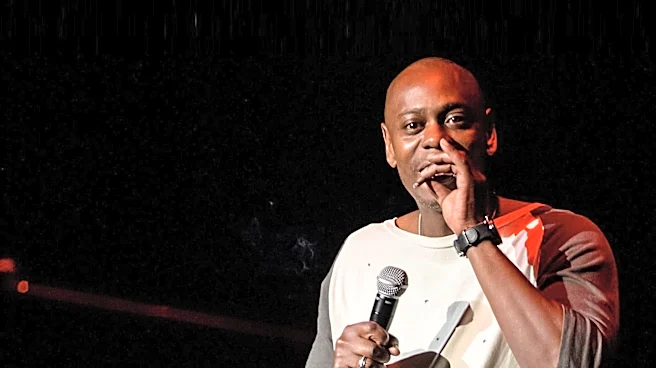
The truth is, there is no writers' room for Dave Chappelle's stand-up specials for anyone to walk out of. Chappelle is legendary for his solitary and grueling creative process. He develops his material not at a desk, but on stage. For months, sometimes years, before taping a special, Chappelle performs hundreds of pop-up shows in small clubs and theaters across the country. He shows up with notes, ideas, and sometimes just a concept, and works through the material live, in front of an audience. This method is a high-wire act of trial and error. Jokes are tested, refined, re-shaped, or discarded based on the real-time feedback of laughter, silence, or groans. He treats each performance as a workshop, a live laboratory where the audience is an unwitting collaborator in honing the final product. His specials are the culmination of this intensely personal and public process, not the product of a writing staff.
The Mix-Up: Confusing Specials with 'Chappelle's Show'
So, where does the 'writers walking away' story come from? It's likely a confusion with his iconic sketch series, Chappelle's Show. That program, which aired from 2003 to 2006, absolutely did have a writers' room, which Chappelle co-created and co-wrote with his partner, Neal Brennan. The end of Chappelle's Show was famously abrupt and contentious. Chappelle himself walked away from a $50 million contract during the production of the third season, citing immense pressure and discomfort with the direction the show's comedy was being interpreted. While Brennan and the other writers didn't 'walk out' on him, Chappelle's departure effectively ended the collaboration and created a rift that became comedy legend. This history of a high-profile, acrimonious split is likely the kernel of truth that has been misapplied to his more recent, and very different, stand-up career.
Why He Works This Way
Chappelle’s stand-up method isn't just a preference; it’s a philosophy. By building his act alone and on stage, he maintains absolute artistic control. This process ensures that every word, every pause, and every punchline is authentically his. He has even described his process as writing jokes 'backwards,' starting with a punchline and building a story to justify it. This allows for a kind of chaotic, subconscious-driven creativity that a committee of writers would likely stifle. It’s a method that demands incredible confidence and a direct, unfiltered connection with the audience. In an era where comedy can feel focus-grouped, Chappelle’s process is a throwback to the purest form of the art: one person, one microphone, and a room full of people ready to be challenged. It is a testament to his belief that true stand-up is not written, but discovered.