






The Two-Minute Miracle
During a live broadcast like the MTV Video Music Awards, the most valuable commodity is time. While you’re watching a commercial break, a frantic countdown has begun backstage. A team of hundreds of crew members often has as little as 90 to 120 seconds
to strike an entire performance set and install a new one. This isn't just about moving a microphone stand; it's about deconstructing and rolling out multi-ton structures, complex lighting rigs, and delicate props, often while the previous performance’s special effects, like smoke or pyrotechnics, are still settling. Each changeover is rehearsed, but with only a few hours of on-stage practice time available for each of the 14 or more acts, the crew may only get to run through the full change twice before going live. It’s a pressure-cooker environment where a single mistake could derail the entire broadcast.
A High-Stakes Game of Tetris
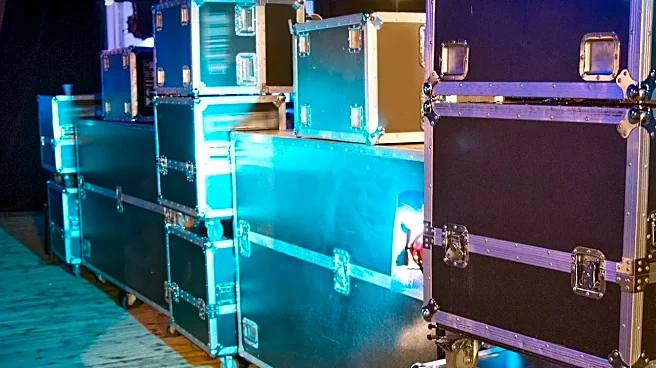
The core of the "traffic problem" is spatial. An arena's backstage area, while seemingly vast, is not large enough to store a dozen fully built, elaborate sets. To solve this, production designers create modular sets on wheels that can be quickly assembled and disassembled. Think of it like a giant, high-stakes game of Tetris. Massive set pieces are often constructed in the venue's parking lot or corridors and then wheeled into place at the precise moment. For a recent VMA, the production used three connected performance zones, with some stages hidden by massive LED screens that displayed distracting graphics while the crew frantically worked behind them. This modularity is key. Scenery is split among multiple companies because one company often can't build everything in the limited time, and it allows producers to play to each company's strengths.
The Human Choreography
Technology is crucial, but it’s the human element that makes it all work. The backstage crew operates like a Formula 1 pit crew. Hundreds of people, from stagehands and electricians to audio techs and prop masters, have a single, highly specific job to do during each changeover. Their movements are choreographed down to the second. They know exactly where to stand, what piece to grab, and where to move it, guided by glow-tape markings on the floor. Stage managers act as the nerve center, coordinating the chaos over headsets and ensuring every department works in sync. This human element extends to talent wranglers, whose job is to navigate performers and their entourages through the maze of equipment and crew, ensuring they hit their mark at the exact right moment. It’s a role described as directing a live, high-stakes ballet with precise, purposeful movements.
Solving Problems with Tech
While people execute the plan, technology makes the plan possible. The VMAs are known for being one of the most technically aggressive broadcasts in entertainment. Stages often feature integrated lifts to make performers appear from below or descend from above. The sets themselves are colossal, with one recent show featuring a 240-foot-wide stage area and a 50-foot-tall central LED wall that served as a dynamic digital sculpture. These LED screens are a secret weapon, allowing for instantaneous changes in scenery without moving a single physical object. Behind the scenes, entire carts may be custom-built just to handle a single complex prop, like safely removing a series of metal frames still hot from pyrotechnic gas lines after a performance. It’s a seamless fusion of brute force and sophisticated engineering, designed to create moments that look effortless on screen.