





When you think of 'Winter's Bone,' you likely recall its raw, visceral moments: the brutal beating, the squirrel skinning, or that haunting chainsaw scene. But there's a quieter, often overlooked scene that redefines Ree Dolly's entire struggle.
The Brutal Beauty We Remember
Debra
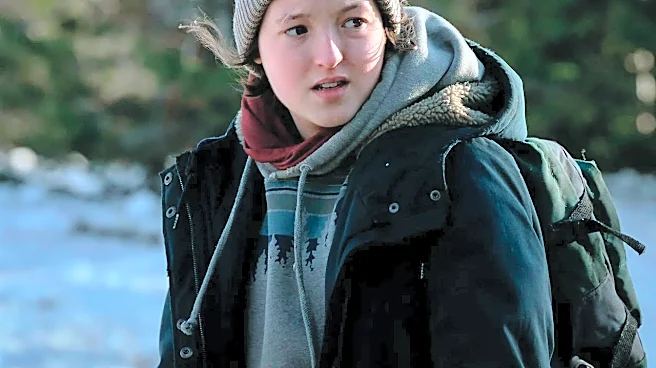
Granik’s 2010 masterpiece is seared into our collective memory for its unflinching depiction of life in the Ozarks. It’s a world of intense loyalty and even more intense violence, governed by a strict code of silence. The film’s most iconic moments are acts of survival. We remember Ree Dolly (Jennifer Lawrence in a star-making role) teaching her younger siblings how to hunt and gut a squirrel because they have nothing else to eat. We remember the terrifying confrontation with her uncle, Teardrop, a man radiating menace. And, of course, we remember the film's climax: Ree being led to a boat by the very women who beat her, forced to recover proof of her father’s death from a freezing lake to save her family's home. These scenes are powerful, defining the film’s grim, survivalist tone. They paint Ree as a reluctant hero forged by necessity, doing what she must to protect her family.
The Scene We All Forgot
But tucked away between these moments of high drama is a quiet, devastating scene that’s easy to miss: Ree’s visit to an Army recruitment office. At a point of desperation, she sees a potential escape. A poster on the wall promises 'a better future,' and a $40,000 sign-up bonus seems like a divine intervention, a way to solve all her problems in one fell swoop. The scene is deceptively simple. She sits opposite a real-life Army recruiter, Sergeant Russell Schalk, who was not a professional actor. He lays out the reality of enlistment. He’s not selling a dream; he’s offering a contract. When he learns she's only 17 and the sole guardian of two young children, the fantasy evaporates. He asks the simple, crushing question: who will care for them when she's gone? The camera holds on Ree's face as the weight of this reality lands. The 'easy' way out is no way out at all.
More Than Just Survival
This is the scene that reshapes the entire story. Before this moment, we see Ree’s quest as one of pure, instinctual survival. She must find her father to keep the house. But the recruiter scene reveals a deeper, more personal tragedy. Ree isn’t just fighting for her family’s future; she’s mourning the death of her own. Her desire to enlist isn't just about the money; it's a flicker of a dream to escape a predetermined life of poverty and crime. The military, for all its faults, represents a world with structure, a paycheck, and a path away from the Ozark underworld that consumed her father. When that door closes, Ree is forced to accept that there is no escape. Her only choice is to go deeper into the world she wanted to leave behind, confronting its darkest corners not for a dream of a better life, but for the stark necessity of keeping a roof over her siblings' heads.
A Different Kind of Heroism
Without the Army recruiter scene, Ree's journey is a straightforward hero's quest. With it, her actions become infused with a profound sense of sacrifice. Every dangerous step she takes after leaving that office is shadowed by the future she has just been forced to give up. Her resilience is no longer just about being 'bred and buttered' a Dolly; it's a conscious choice to forsake her own aspirations for the sake of her brother and sister. The film’s ending, where she receives the bond money and secures the home, feels less like a victory and more like a sentence. She has won the battle, but in doing so, has fully accepted her place in the very cycle of violence, poverty, and isolation she once dreamed of breaking. She saved her family, but lost herself.