



The Quiet Rebellion on the Carpet
For years, the gold standard for menswear on the red carpet was razor-sharp, spray-on tailoring. Think Daniel Craig’s James Bond suits—powerful, precise, and leaving very little to the imagination. But as anyone who has attended a screening at Cannes
or Venice knows, there’s a different kind of style currency at play. It’s less about brute-force formality and more about a cultivated, intellectual ease. This is where the pleated trouser has quietly taken center stage. Actors like Paul Mescal, Austin Butler, and Donald Glover have made it their signature. They arrive not in skin-tight trousers but in high-waisted, voluminous pants that drape and flow. The silhouette is relaxed, almost louche. It’s a subtle rejection of the hyper-masculine, corporate-boardroom aesthetic that dominated menswear for a decade. Instead of looking like they’re closing a deal, they look like they’ve just stepped out of a Truffaut film, ready to discuss cinematic theory over an espresso.
A Deliberate Nod to the Past
The power of the pleated trouser lies in its history. This isn't a fleeting trend; it’s a revival. The style immediately conjures images of Old Hollywood’s golden age. Think Cary Grant, Fred Astaire, or Gene Kelly—men who moved with an unstudied grace, their wide-leg, pleated trousers billowing around them. Choosing to wear them in the 21st century is a “studied” act because it’s a conscious reference. It signals an appreciation for classic menswear and cinematic history. It tells the world you’ve done your homework. An actor wearing these trousers isn’t just picking an outfit; they are curating a persona. They are aligning themselves with a lineage of elegance and artistry, distinguishing themselves from the fleeting noise of pop culture. It’s a sartorial choice that feels both nostalgic and refreshingly modern, a way of looking forward by looking back.
The Psychology of the Silhouette
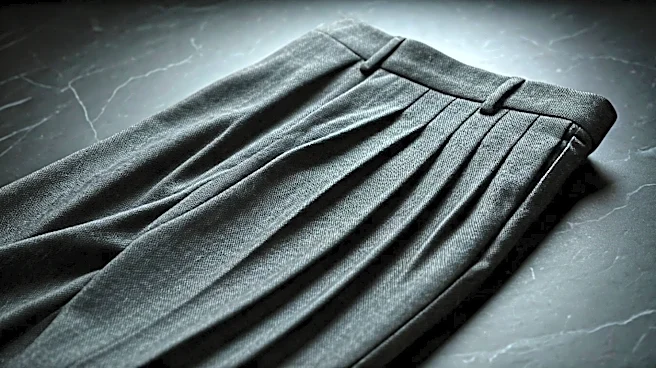
Beyond the historical context, the pleated trouser works on a psychological level. The extra fabric created by the pleats at the waistband adds volume and creates a flowing line down the leg. This silhouette is inherently more comfortable and forgiving than its flat-fronted cousin. That comfort translates directly into confidence. There’s no stiffness, no restriction. The wearer can move freely, sit comfortably, and exude a sense of being completely at ease in their own skin. This nonchalance is magnetic. In a high-pressure environment like a film festival, where every gesture is scrutinized, wearing something that allows you to relax is a power move. The look is “studied” because it’s intentionally effortless. It suggests the wearer is so confident in their work and their place in the world that they don’t need the armor of restrictive tailoring. Their style is an extension of their relaxed self-assurance, not a costume for it.
How to Make the Look Your Own
The good news is that this film-festival cool is remarkably easy to translate into a real-world wardrobe. The key is balance and proportion. If you’re going for a wider-leg pleated trouser, keep the top half clean and relatively fitted. A simple, high-quality tucked-in t-shirt, a fine-gauge knit polo, or a crisp camp-collar shirt are perfect companions. For fabrics, look for materials that drape well. Wool flannel is ideal for cooler months, while linen or Tencel blends are perfect for summer. The waist is crucial: pleated trousers look best when worn higher on the natural waist, which helps elongate the leg line. As for footwear, they are surprisingly versatile. A pair of classic leather loafers leans into the preppy, old-money vibe. Clean, minimal white sneakers can dress them down for a more contemporary, casual feel. The goal isn’t to replicate a red-carpet look exactly, but to capture its spirit: thoughtful, comfortable, and unapologetically stylish.