



1. Lionel Messi: The Final Triumph
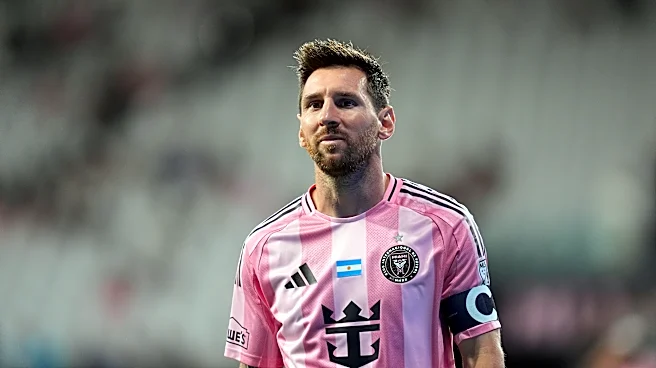
For nearly two decades, the one question mark hanging over Lionel Messi’s claim as the greatest of all time was his lack of a World Cup. He’d won everything else, but the ultimate prize with Argentina remained painfully elusive. He’d come close in 2014, a loss in the final leaving a permanent scar. Qatar 2022, at age 35, was billed as his last dance. It started with a nightmare—a stunning loss to Saudi Arabia. But what followed was the stuff of legend. Messi didn’t just play; he willed his team forward. He scored in the group stage, the round of 16, the quarterfinals, the semifinals, and twice in the final. He was a playmaker, a leader, and a clutch goalscorer, all at once. The final against France was an instant classic, and when Gonzalo Montiel’s
penalty hit the back of the net, the image of Messi falling to his knees in relief and joy was an immediate, iconic piece of sports history. The final chapter wasn't just written; it was a masterpiece that completed his story.
2. Cristiano Ronaldo: The Bitter Farewell
If Messi’s tournament was a fairy tale, Cristiano Ronaldo’s was a cautionary one. At 37, the Portuguese icon arrived in Qatar under a cloud, having forced a messy exit from Manchester United. He scored a penalty in the opening game to become the first man to score in five World Cups, a historic achievement. But that was the high point. As the tournament progressed, his influence waned. He was visibly frustrated, his explosive pace a memory. The defining moment came when he was benched for Portugal’s knockout game against Switzerland, a move that would have been unthinkable just months prior. His replacement, Gonçalo Ramos, scored a hat-trick. Brought on as a sub in the quarterfinal loss to Morocco, Ronaldo could do little to change the outcome. He left the field in tears, a solitary figure walking down the tunnel. It was a harsh, undignified end to a legendary international career, a final chapter that underscored the cruel, unsentimental nature of time.
3. Luka Modrić: The Ageless Maestro
While Messi and Ronaldo commanded the headlines, Luka Modrić quietly went about his business with the same impossible grace he has shown for years. Four years after leading Croatia to a shocking final appearance in Russia, the 37-year-old midfielder was back, pulling the strings once again. Many expected Croatia to fade, their golden generation now decidedly gray. Modrić had other plans. He was the tireless engine in midfield, his vision, control, and stamina defying his age. He guided them through tense penalty shootouts against Japan and Brazil, his calm demeanor a steadying force for a team that thrives on grit. While they couldn't repeat their trip to the final, falling to Argentina in the semis, Modrić led them to a third-place finish. His performance was a masterclass in sustained excellence, a final chapter that proved true class is timeless.
4. Olivier Giroud: The Unsung Hero’s Redemption
Olivier Giroud went through the entire 2018 World Cup without a single shot on target, a bizarre statistic for the starting striker of the winning team. He was a functional player, praised for his link-up play but mocked for his lack of goals. In 2022, he wasn't even supposed to be the main man. But when Ballon d'Or winner Karim Benzema was ruled out with a last-minute injury, the 36-year-old Giroud was thrust into the spotlight. This time, he seized it. He scored twice in the opening game and continued to find the net, including a crucial winner against England in the quarterfinals. Along the way, he surpassed Thierry Henry to become France's all-time leading male goalscorer. Far from the passenger he was perceived to be in 2018, Giroud was a vital, decisive weapon for a team that fought its way back to the final. His last World Cup was a story of redemption, proving that even late in a career, a player can rewrite their own narrative.
5. Ángel Di María: The Man for the Big Moment
Ángel Di María has always been one of Argentina’s most important, if sometimes overlooked, players. His career has been defined by clutch performances in finals—scoring the winner in the 2008 Olympic final and the 2021 Copa América final. But injury had cruelly robbed him of playing in the 2014 World Cup final. At 34, Qatar was his chance at redemption. After a quiet tournament hampered by minor injuries, he was a surprise starter in the final against France. He was electric. He won the penalty for Messi's first goal and then scored a sublime goal of his own to put Argentina up 2-0, finishing off one of the great team moves in World Cup history. Substituted in the second half, he watched nervously from the bench as the lead evaporated before the ultimate penalty shootout victory. It was a fitting final act: one last, decisive contribution on the biggest stage of all, securing the trophy he and his country had craved for so long.