



The Dapper Dan Blueprint
To understand what the 90s almost were, you have to look at the late 80s. The dominant look was pure, unapologetic aspiration, and its king was Dapper Dan, the legendary Harlem tailor. Before luxury brands courted hip-hop, Dap was creating custom streetwear
by “bootlegging” the logos of Gucci, Fendi, and Louis Vuitton. He wasn’t just copying; he was remixing high fashion for the streets, creating opulent tracksuits, car interiors, and bomber jackets for stars like LL Cool J, Salt-N-Pepa, and Mike Tyson. This was a style built on reclaiming the symbols of unattainable wealth and making them your own. Had this trajectory continued, the 90s might have simply doubled down on this aesthetic: a more refined, but ultimately European-centric, vision of luxury and status.
A Conscious Shift in Culture
As the 80s bled into the 90s, the sound and message of hip-hop began to change. A new wave of artists, including groups like A Tribe Called Quest, De La Soul, and Queen Latifah, ushered in an era of Afrocentricity and social consciousness. Their music and style moved away from pure bravado and towards an exploration of Black pride, history, and identity. This cultural awakening created a demand for a fashion that did the same. Rappers and fans began looking for clothing that reflected this new mindset, trading flashy gold for leather Africa medallions and embracing Kente cloth patterns. The question was no longer just about showing you could afford luxury; it was about expressing who you were and where you came from. The stage was set for a visual revolution.
The Rise of Black-Owned Streetwear
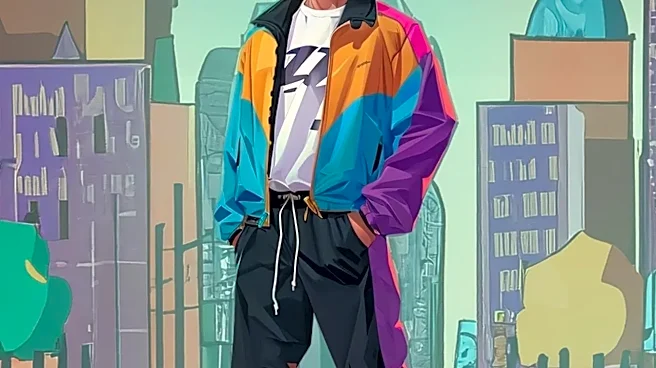
Answering the call were a new generation of Black designers who saw a void in the market. Chief among them were Carl Jones and T.J. Walker, who founded Cross Colours in Los Angeles in 1989. Their motto was “Clothing Without Prejudice,” and their designs featured bright, bold colors and positive social messaging like “Educate 2 Elevate” and “Stop D Violence.” They weren't just making clothes; they were creating a uniform for a movement. Around the same time, Karl Kani was building his brand on the principle of making clothes that actually fit the community he was selling to, popularizing the baggy silhouette that would define the decade. Along with FUBU—an acronym for “For Us, By Us”—these brands represented a monumental shift. Hip-hop fashion was no longer just about co-opting outside symbols; it was about building and owning the culture from the inside out.
The Moment It All Changed
The tipping point came not in a music video, but on primetime television. In 1990, a charismatic young actor named Will Smith became the star of The Fresh Prince of Bel-Air. From the very first season, his character was frequently decked out in vibrant, graphic-heavy Cross Colours outfits. The show was a massive hit, and it beamed this new, Afrocentric streetwear aesthetic into millions of American homes every week. The brand's founders credit Smith's on-screen presence as the catalyst for their explosion in popularity. Soon, every major artist of the era, from Tupac Shakur and Dr. Dre to TLC and Snoop Dogg, was wearing Cross Colours, Karl Kani, and other Black-owned brands. The baggy, colorful, and message-driven look had won. The alternative—a simple continuation of 80s logo-mania—was officially history, and the iconic style of the 90s as we know it was born.