

The Star's Prerogative
In the New Hollywood of the 1970s, the balance of power shifted. Directors were auteurs, but stars were gods, and few ascended faster than Ryan O’Neal. After his Oscar-nominated turn in 1970’s Love Story made him a global phenomenon, O’Neal approached
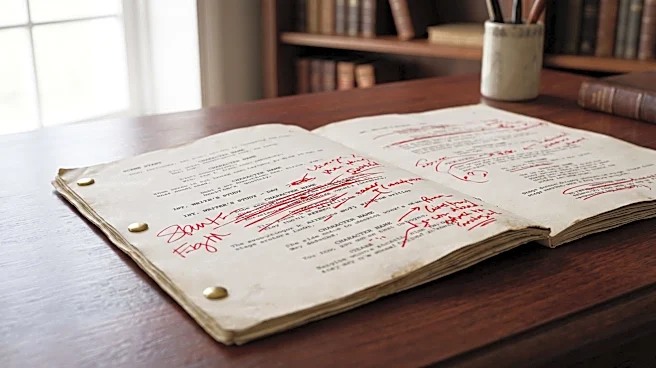
his work with the confidence of an actor who believed his instincts were paramount. For him, a screenplay wasn't always a sacred text to be followed verbatim; it was a starting point, a blueprint that could be improved upon. This mindset would define his most famous collaborations and create both cinematic magic and legendary friction. It wasn't just about memorizing lines, it was about making them his own, a practice that endeared him to audiences but frequently challenged his directors.
Success and Friction with Bogdanovich
O'Neal's collaborations with director Peter Bogdanovich produced some of the era's most beloved films. In the screwball comedy What's Up, Doc? (1972), O’Neal played the stuffy professor to Barbra Streisand's whirlwind of chaos, a role that required impeccable comic timing. A year later, he starred opposite his own daughter, Tatum O'Neal, in the Depression-era dramedy Paper Moon (1973). The film was a triumph, earning then-10-year-old Tatum an Academy Award. While the on-screen chemistry was undeniable, the process was not always smooth. Bogdanovich, a film scholar and meticulous craftsman, was building homages to classic Hollywood, while O'Neal was asserting his star power. The tension was amplified by a complicated father-daughter dynamic; Tatum later said her father was jealous of her Oscar win, a claim that highlights the ego and insecurity that often fueled his on-set conduct.
The Kubrick Standoff
No project illustrates O'Neal's rebellious streak more than his experience on Stanley Kubrick’s 1975 epic, Barry Lyndon. Kubrick was a notorious perfectionist who demanded absolute fidelity from his actors, often requiring dozens or even hundreds of takes to achieve his precise vision. O’Neal, accustomed to a more flexible process, found himself in a battle of wills with the master filmmaker. The shoot was famously arduous. But the conflict went beyond long hours. According to Tatum O'Neal's memoir, her father was initially set to provide the film's voice-over narration, a key element of the story. However, after a reported falling-out with Kubrick, the role of narrator was given to another actor, leaving O’Neal’s performance entirely on-screen. In later years, O'Neal spoke of Kubrick with a mix of awe and exhaustion, calling him a “god” while admitting the process carved away at him. The result was a haunting, alienated performance that was perfect for the film, forged in the fires of creative opposition.
A Legacy of Defiance
So why did he do it? The impulse to change lines wasn't just about an actor’s craft; it was deeply rooted in O'Neal's personality. His life off-screen was often turbulent, marked by fraught family relationships and a well-documented temper. His son, Griffin O'Neal, once described his father in harsh terms, pointing to a deep-seated need for control. This desire likely spilled over into his professional life. For an actor who shot to fame with staggering speed, rewriting a scene may have been a way to assert control in the chaotic world of filmmaking. It was a declaration that he was not just a handsome face reading lines someone else wrote, but an active, and at times defiant, co-creator of his own iconic legacy. His charm was what made him a star, but his refusal to simply play by the rules is what made him Ryan O'Neal.