







Born on the Battlefield
Before it was a staple of preppy style, the rugby shirt was a piece of performance equipment. Go back to the 19th-century origins of the game in England, and you’ll find players in something closer to a dress shirt and bow tie. That didn’t last. The sport
was (and is) brutal, a chaotic mix of running, tackling, and scrummaging. Shirts were constantly being torn and grabbed. The solution was a garment built for war. Early rugbies were crafted from incredibly dense, heavy-gauge cotton jersey that could withstand immense strain. The collar, another defining feature, was originally made of stiff cotton twill, designed to be turned up to protect a player’s neck but also strong enough to be grabbed without ripping. And those signature rubber buttons? They replaced traditional ones that could scratch an opponent’s face in a scrum. Every element was pure function, designed to survive a contest where durability was paramount.
From the Pitch to the Quad
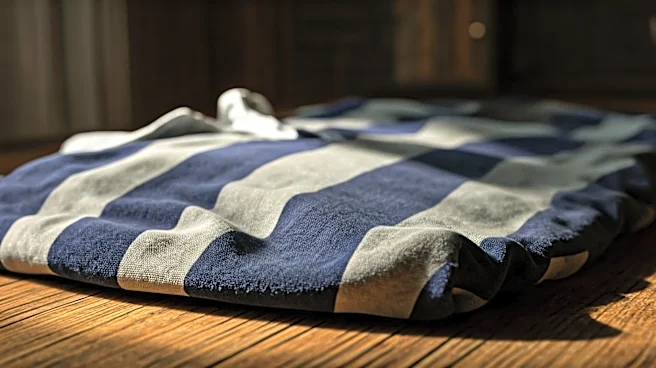
So how did this piece of athletic armor become a symbol of leisure? Like many menswear classics—the trench coat, the bomber jacket, the desert boot—the rugby shirt was adopted by civilians who appreciated its rugged good looks and inherent quality. In the U.S., its big moment came in the mid-20th century when it was embraced by Ivy League students. For a generation of young men on campuses like Harvard and Yale, the rugby shirt was the perfect off-duty uniform. It was more substantial than a polo and more formal than a t-shirt, projecting a kind of casual, athletic confidence. It said you were active, maybe even a little rebellious, but still part of the establishment. Brands like Gant and, later, Ralph Lauren, codified this look, turning the bold, horizontal “hoops” into a visual shorthand for American preppy culture. It became the weekend wear of the aspirational class.
The Uniform of the Rebel Artist
Just when the rugby shirt seemed locked into a single identity, it was co-opted by a completely different crowd: the creatives and the counter-culture. Perhaps the most famous example is the artist David Hockney, who was frequently photographed in one. For him, the rugby wasn't a symbol of collegiate conformity but a comfortable, practical, and slightly eccentric uniform for the studio. It was a working garment, just as it was for the players. Mick Jagger of The Rolling Stones also famously wore them, subverting their clean-cut image with rock-and-roll swagger. This duality is key to the rugby's longevity. It can be worn by a Kennedy on a sailboat or a punk in a dive bar. This tension—between the establishment and the outsider, the sportsman and the artist—gives the shirt a depth that trend-driven items lack. It’s a blank canvas for self-expression, not a prescriptive costume.
Why It Still Works Today
Today, the rugby shirt is everywhere again, from streetwear brands like Noah and Aimé Leon Dore to high-fashion runways. Its current resurgence isn’t an accident. In an era of disposable fast fashion, there’s a growing appetite for authenticity and substance. The rugby shirt is the antithesis of flimsy, temporary clothing. It’s built to last, both physically and stylistically. Modern interpretations play with the formula—slimming the fit, using unexpected colors, or adding graphic embellishments—but the core DNA remains. That heavy cotton, the sturdy collar, and the rubber buttons still signal quality. The shirt’s history gives it a weight and meaning that newly invented items can't replicate. It has earned its classic status not by being fashionable, but by being useful, adaptable, and unapologetically itself.