






The Incredible Value Proposition
Let’s start with the obvious: your wallet. Knockout round tickets, especially for the quarterfinals and beyond, will command astronomical prices on both primary and secondary markets. You’re competing with the entire world for a handful of seats. A group stage match, by contrast, offers the full World Cup experience—the national anthems, the passionate fans, the on-field drama—for a fraction of the cost. Think of it as the cost-to-thrill ratio. For the price of one nosebleed seat at a semifinal, you could potentially attend two or even three group stage games, soaking in the atmosphere in multiple cities. You get 90% of the World Cup magic for probably 20% of the premium-ticket price.
A Global Festival, Not a Two-Team Show
The knockout rounds are, by definition, a process of elimination.
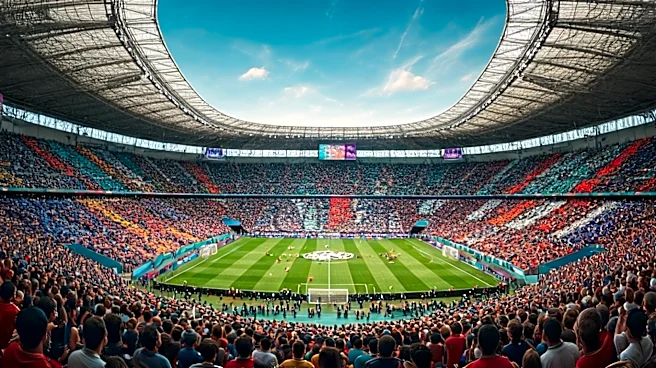
The field narrows, and so does the diversity of fanbases. The group stage, however, is a beautiful, chaotic festival of global culture. With the tournament expanding to 48 teams in 2026, the early weeks will be an unprecedented melting pot. In a single day in a host city, you might see fans from Japan, Senegal, Colombia, and Denmark all singing in the streets together. A final is about two nations; the group stage is about the entire world converging. You’re not just buying a ticket to a soccer match; you’re buying a day pass to the most vibrant international party on the planet.
Less Nerve-Shredding, More Pure Joy
There’s a unique kind of anxiety that comes with a do-or-die knockout match. The tension is palpable, and a single mistake can end a nation’s dream. It’s thrilling, but it can also be emotionally draining. Group stage matches, particularly the first or second games for a team, have a different energy. There’s hope, optimism, and a bit more room for error. The atmosphere is often less about desperate stress and more about pure celebration and national pride. Fans are there to have a good time and support their team at the start of their journey. This creates a more relaxed, festive, and arguably more enjoyable environment for a neutral or casual observer.
The Birthplace of Legends and Upsets
The World Cup narrative isn’t just written in the final. It’s forged in the fiery drama of the group stage. This is where underdog stories are born and giants are unexpectedly slain. Who can forget Saudi Arabia shocking Argentina in 2022, or South Korea knocking out Germany in 2018? Being there for one of *those* games is a story you’ll tell for the rest of your life. The final is the predictable conclusion of the tournament’s main plotline, but the group stage is where all the shocking twists and compelling subplots are introduced. You have a much higher chance of witnessing a historic, bracket-busting moment that people will talk about for decades.
Smarter Logistics for the Savvy Traveler
Planning a trip around the World Cup is a logistical puzzle. If you pin your hopes on following one team through the knockouts, you’re at the mercy of their performance. They win, and you’re scrambling to get to the next city; they lose, and your trip is over. The group stage offers predictability. You can build a coherent travel plan around a set of matches in a specific region, whether it’s the cluster of games on the West Coast, the East Coast, or in the heart of Mexico. This allows you to book flights and hotels with more certainty, see multiple cities, and experience different facets of the tournament without the chaos of last-minute travel changes.