










The Ultimate Freebie
First, let’s talk utility. Art Basel, whether in Miami Beach, Hong Kong, or its native Switzerland, is a sprawling, overwhelming affair. Attendees walk for miles, navigating massive convention centers filled with gallery booths, special exhibits, and pop-up
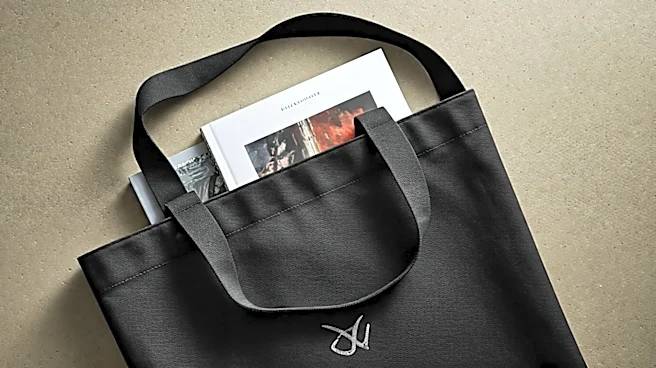
events. They collect catalogs, brochures, artist cards, and endless paper ephemera. In this context, a large, sturdy tote bag isn’t just a nice-to-have; it’s an essential piece of equipment. The official Art Basel tote, often distributed to VIPs and early attendees, serves this purpose perfectly. It’s spacious enough to hold a day's worth of accumulated materials, durable enough not to tear, and hands-free enough to allow for easy gallery navigation and handshake-ready mobility. Its primary function is brutally practical: it’s a tool for surviving the fair.
A Canvas of Exclusivity
But if it were only about utility, any old bag would do. The Art Basel tote’s true power lies in its status. These bags are not for sale. They are typically given to a select group—VIP cardholders, gallerists, major collectors, and the press. Getting one signals that you belong. It’s a quiet, fabric-based declaration of access. Carrying it through the Miami Design District or the streets of Basel becomes a performance. You’re not just a tourist; you’re an insider, part of the exclusive ecosystem that makes the art world turn. This manufactured scarcity transforms a simple canvas bag into a trophy. It says, “I was there, and I was on the list.” In the days and weeks following the fair, spotting one in an airport or a different city serves as a subtle nod to a fellow member of the tribe, a shared signifier of cultural capital.
The Art of the Collab
What elevates the Art Basel tote from mere merch to a collectible object is the art itself. For years, the fair’s primary sponsor, UBS, has commissioned acclaimed contemporary artists to design the official bag. This turns the tote into a limited-edition, wearable piece of art. Past collaborators have included artists like Sarah Morris, John Baldessari, and Rirkrit Tiravanija, whose distinct visual styles grace the canvas. The bag is no longer just a logo; it’s a mobile piece of a respected artist’s work. This clever strategy achieves several goals at once. It reinforces Art Basel’s commitment to artistic excellence, provides the sponsor with a sophisticated branding opportunity, and gives the recipient an item with genuine creative value. It’s not just a bag with an artist’s name on it; it’s an extension of their practice, distributed in a uniquely democratic, yet exclusive, way.
The Souvenir as Social Proof
Ultimately, the Art Basel bag is the perfect symbol for the contemporary art world itself—a space where culture and commerce are inextricably linked. It embodies the tension between accessibility (it’s just a tote bag!) and extreme exclusivity (you have to be a VIP to get one). It's a marketing tool that doesn't feel like one, a piece of memorabilia that functions as social proof. For the person carrying it, the bag is a walking resume of their taste and access. For observers, it’s a clue to the complex social hierarchies that define high-stakes cultural events. It has a longer shelf life than an Instagram story and more subtlety than a name-dropped gallery mention. In a world saturated with digital proof, this tangible object has become a remarkably potent and enduring symbol of being in the know.