
The Planet’s Great Conveyor Belt
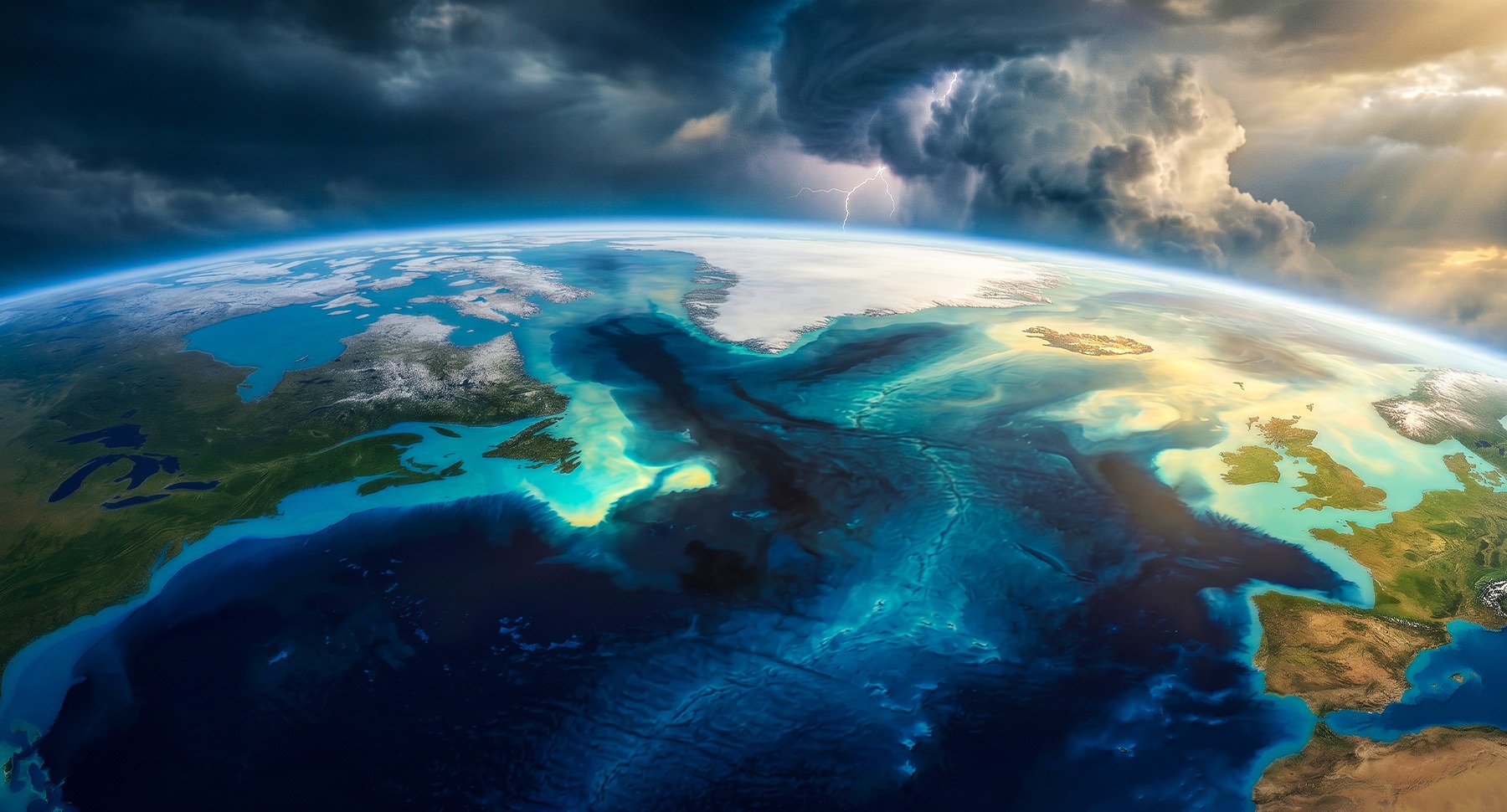
Imagine a colossal conveyor belt in the Atlantic Ocean. In the tropics, warm, salty water flows north along the surface, forming the Gulf Stream that keeps places like the U.K. and Western Europe milder
than they would be otherwise. As this water reaches the frigid North Atlantic near Greenland, it cools, gets saltier and denser, and sinks deep into the ocean. From there, it travels south, eventually cycling back up to the surface to start the journey again. This entire system is called the Atlantic Meridional Overturning Circulation, or AMOC. It’s a primary driver of climate patterns in the Northern Hemisphere, transferring incredible amounts of heat and influencing everything from rainfall in the Sahel to hurricane season in the Caribbean.
Why Is It Slowing Down?
The engine of the AMOC is that sinking process in the north. It depends on the water being cold and salty enough to become dense and plunge to the ocean floor. But there’s a problem: the massive ice sheet over Greenland is melting at an unprecedented rate due to global warming. This injects enormous amounts of cold, fresh water into the North Atlantic. Because fresh water is less dense than salt water, it doesn't sink as readily. It essentially sits on the surface, acting like a lid and disrupting the engine that powers the entire conveyor belt. Scientists have observed that the AMOC has slowed by an estimated 15% since the mid-20th century, putting it at its weakest state in over a thousand years. It’s a direct, physical consequence of a warming planet.
What Happens If It Weakens Further?
A significantly weaker AMOC wouldn't be a subtle shift. It would be a fundamental rewiring of our climate. For the U.S. East Coast, the effects could be dramatic. Because the northward-flowing Gulf Stream would be weaker, water could effectively “pile up” along the coastline, leading to accelerated sea-level rise in cities from Boston to Miami. Weather patterns would also be thrown into disarray. A weaker current could mean hotter, more stagnant summers and altered storm tracks. Some models suggest it could lead to more powerful hurricanes intensifying closer to the coast. Paradoxically, while the rest of the world warms, Europe could face much colder and stormier winters, as the flow of tropical heat is cut off. Other potential impacts include shifting rainfall patterns that could lead to drought in some agricultural zones and flooding in others.
The Tipping Point Question
The most alarming question is whether the AMOC could reach a “tipping point” and shut down altogether. A 2023 study published in *Nature Communications* suggested this could happen sooner than previously thought, potentially within this century, though many scientists urge caution, pointing out the high level of uncertainty in the models. A full collapse is considered a low-probability, high-impact event—the kind of scenario that keeps climate scientists up at night. There isn't a consensus on the exact timing or if a total collapse is even possible, but there is broad agreement that the current is weakening and that this trend is deeply concerning. It's less a question of *if* the weakening will have an effect and more a question of *how severe* those effects will be and *how soon* they will become undeniable.