



The Rom-Com Queen No One Took Seriously
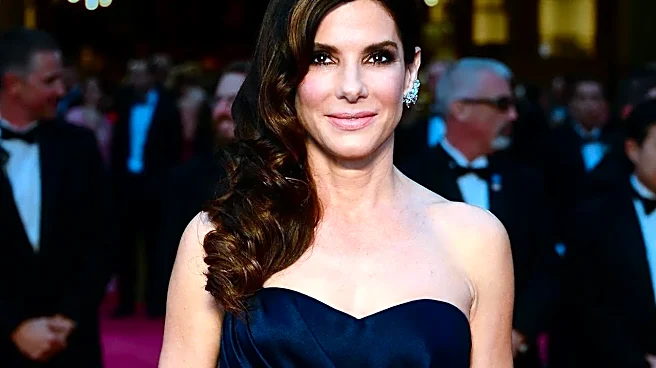
For the first decade and a half of her career, Sandra Bullock was a certified movie star, but not an Actress with a capital 'A.' Films like 'Speed,' 'While You Were Sleeping,' and 'Miss Congeniality' made her a global icon and a box-office powerhouse.
Audiences loved her, but the Academy of Motion Picture Arts and Sciences, which notoriously favors heavy drama over light comedy, paid her no mind. She was America's Sweetheart: relatable, funny, and bankable. In the world of Oscar politics, however, these qualities often translate to being seen as a lightweight. Her job was to sell tickets, not to deliver the kind of transformative, physically demanding, or emotionally draining performance that voters historically reward.
The 'Blind Side' Campaign: A Perfect Storm
The game changed in 2009. Bullock's role as the real-life, no-nonsense Leigh Anne Tuohy in 'The Blind Side' was the perfect vehicle. The film was a surprise box-office behemoth, and Bullock’s performance, while praised, was inseparable from the narrative surrounding it. This wasn't just a role; it was a campaign. Bullock, a beloved star, took on a dramatic part in a heartwarming, inspirational film based on a true story. It was a political slam dunk. She was visible, charming on the awards circuit, and even built a playful public rivalry with fellow nominee Meryl Streep. It was a brilliant strategy that positioned her as both a deserving actress and a sentimental favorite. When she won, it felt less like a victory for one performance and more like a coronation for a decades-long career as Hollywood royalty. It was her 'turn.'
The 'Gravity' Snub: When a Win Becomes a Liability
Just four years later, Bullock delivered what many consider the best performance of her career in 'Gravity.' The technically demanding role, which saw her on screen alone for most of the film, was met with universal critical acclaim. She received her second Best Actress nomination, but the political landscape had shifted. She had already won. The narrative of 'Sandra Bullock, Overdue Star' had been spent on 'The Blind Side.' Now, she was up against Cate Blanchett, who was delivering a powerhouse performance in Woody Allen's 'Blue Jasmine.' Blanchett dominated the awards season, and the consensus was that it was her year. Bullock’s recent win for 'The Blind Side,' a performance now viewed by some as less deserving, effectively worked against her. The Academy rarely awards the same actor twice in such a short span, unless the performance is so undeniable it cannot be ignored. For voters, giving Bullock a second Oscar would have felt premature; giving one to the revered Blanchett felt right.
The Politics of Legacy
In recent years, 'The Blind Side' has been mired in controversy, with the real-life subject Michael Oher alleging the story presented was not entirely true. This has led to some calls for Bullock to relinquish her award, a notion that most industry observers find ridiculous. An actor's job is to play a role, not to vouch for the real-life person's character. However, it highlights the tricky nature of Oscar politics. Bullock won for a white-savior film that has aged poorly for some, while arguably losing for a more artistically ambitious and challenging role. This pattern isn’t unique to Bullock. It’s the story of the Oscars itself: a complex, often contradictory dance between art, commerce, narrative, and the subtle, unspoken rules of who deserves to win and when.