




The opening of 'Miracle on 34th Street' is one of cinema's most iconic holiday moments. But the story of how it was filmed, using the real 1946 Macy's Thanksgiving Day Parade as a live set, is a minor miracle in itself.
A High-Stakes Production Gamble
In an era dominated by studio backlots
and soundstages, director George Seaton made an audacious choice: to capture the start of his film amid the chaos of a real, massive public event. The studio, 20th Century Fox, was initially hesitant about the cost and logistics of filming on location in New York. However, Seaton was so convinced that the film needed the authenticity of the actual Macy's Thanksgiving Day Parade that he insisted. This meant there would be no second chances. As actress Maureen O’Hara, who played Doris Walker, later recalled, it was a 'mad scramble' to get every shot right the first time because the parade certainly wasn't going to stop for a retake. The decision was a gamble, but it paid off by grounding the film's magical story in a tangible, vibrant reality that a soundstage never could.
The Man Who Was Santa Claus
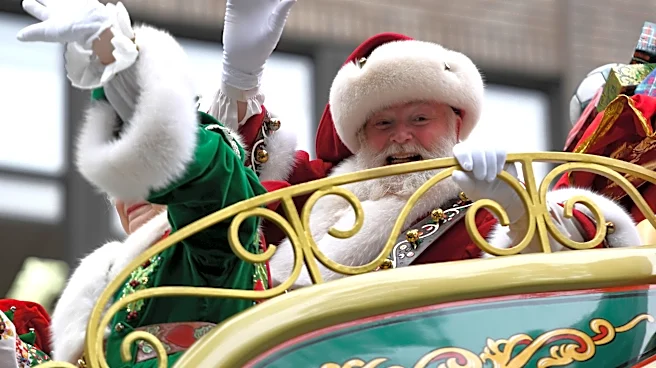
The stroke of genius went beyond just filming at the parade. Unbeknownst to the thousands of New Yorkers lining the streets on Thanksgiving Day 1946, the man on the official Santa Claus float was Edmund Gwenn, the actor playing Kris Kringle. He waved to the crowds, participated in the festivities, and even addressed spectators from the Macy's marquee after the parade, fully in character. The public had no idea they were serving as unpaid extras in a Hollywood movie. Gwenn's performance was so convincing that many, including his young co-star Natalie Wood, believed he truly was Santa Claus. This meta-performance blurred the line between fiction and reality, making the film's central question—is this man really Santa?—feel astonishingly real from the very first scenes.
Capturing Lightning in a Bottle
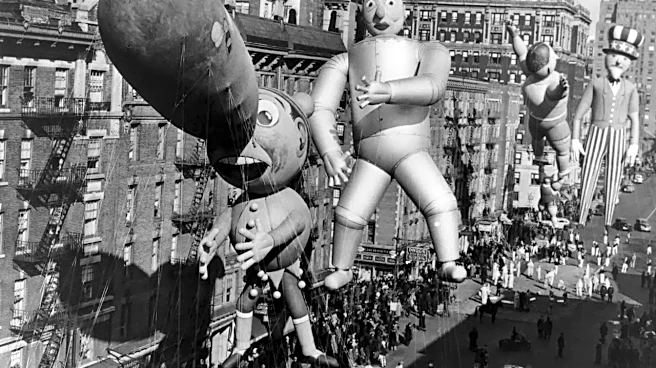
Filming a movie during a live, one-time-only event presented immense logistical challenges. Director George Seaton positioned as many as 14 cameras along the parade route to ensure he captured all the necessary angles, from wide shots of the crowds and balloons to close-ups of his actors. The crew had to work quickly and discreetly, often placing cameras within the parade itself, forcing the procession to move around them. The weather was also a factor, with O'Hara recalling how 'bitterly cold' the day was. The cameras even froze at points during the New York shoot, requiring the crew to thaw them by a fireplace in a kind stranger's home. This guerilla-style approach gave the opening sequence a documentary-like energy that immediately pulls the audience into the story.
An Authentic Foundation for Fantasy
Ultimately, the decision to use the real Macy's parade was more than a clever production trick; it was the film's narrative anchor. The movie asks the audience to believe in something as fantastical as the real Santa Claus working at a department store. By starting with the undeniable reality and spectacle of the parade—an event viewers recognized and loved—the film establishes a baseline of authenticity. The real crowds, the real floats, and the real festive atmosphere of New York City lend a powerful credibility to the fictional story that follows. This opening sequence did more than just set the scene; it also helped elevate the Macy's Thanksgiving Day Parade from a New York tradition to a nationally recognized symbol of the holiday season, with nationwide broadcasts beginning soon after the film's success. It created a symbiotic relationship where the film immortalized the parade, and the parade provided the film with a perfect, miracle-filled beginning.