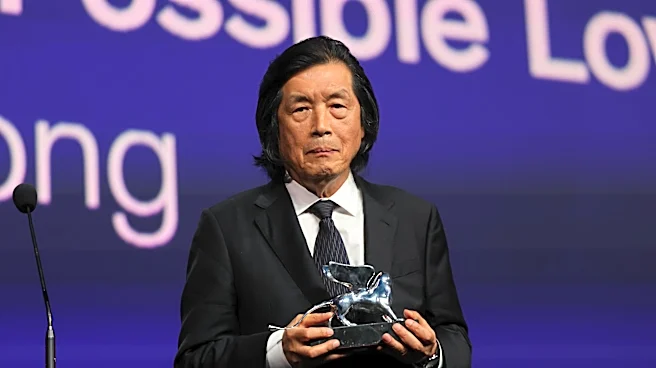

The So-Called 'One-Inch Barrier' Is Crumbling
Not long ago, the conventional wisdom in Hollywood was that American audiences simply wouldn’t show up for a movie that required reading. In his 2020 Oscar speech, “Parasite” director Bong Joon-ho famously
challenged viewers to overcome the “one-inch-tall barrier of subtitles” to discover more amazing films. Six years later, at TIFF 2026, that barrier seems less like a concrete wall and more like a welcome mat. Foreign-language films aren’t just niche curiosities for cinephiles anymore; they are becoming genuine crowd-pleasers. The enthusiastic standing ovations for international titles at this year's festival prove that a compelling story, brilliantly told, connects with audiences on a visceral level, regardless of the language spoken on screen. The gasps, laughs, and applause are universal.
You Can Thank Your Streaming Queue
So, what changed? For starters, our viewing habits at home. For years, streaming giants have been doubling as global content libraries. Platforms like Netflix and Hulu have normalized the subtitle experience for millions of Americans, making it a regular part of binge-watching. After devouring series from South Korea, Spain, or Germany from the comfort of your couch, reading subtitles at the cinema feels far less intimidating. In fact, surveys show a dramatic increase in subtitle use across the board, even for English-language content, due to issues like muddled audio mixing and watching on mobile devices in public. Half of Americans now report using subtitles most of the time. We’ve been training for this moment without even realizing it.
A New Generation Leads the Way
Demographics play a huge role in this cultural shift. Younger audiences, particularly Gen Z and millennials, have grown up in a more globalized and digitally connected world. They are significantly more open to foreign-language content than older generations. One 2024 study noted that while over half of viewers over 55 are put off by subtitles, that number drops to less than a third for Gen-Z. For this generation, discovering a new favorite director from another country is as easy as scrolling through social media. Their cultural curiosity and multilingual exposure in daily life mean that a film's country of origin is a point of interest, not a deterrent. This is the audience filling festival seats, hungry for fresh narratives that Hollywood might not provide.
Great Stories Speak Every Language
Ultimately, the success of international films at TIFF comes down to the simplest factor: they’re fantastic movies. A taut thriller is a taut thriller, whether the characters are shouting in Korean or whispering in French. A heartbreaking romance elicits tears in any language. The themes of class, family, ambition, and justice explored in many of these films are universal, resonating deeply with viewers everywhere. As Bong Joon-ho also said, we all live in one country now: that of cinema. The most exciting films often come from outside the familiar Hollywood system, offering unique rhythms, emotional risks, and perspectives that feel refreshingly new. They remind us that powerful storytelling knows no borders, and subtitles aren't a barrier—they're a bridge.