


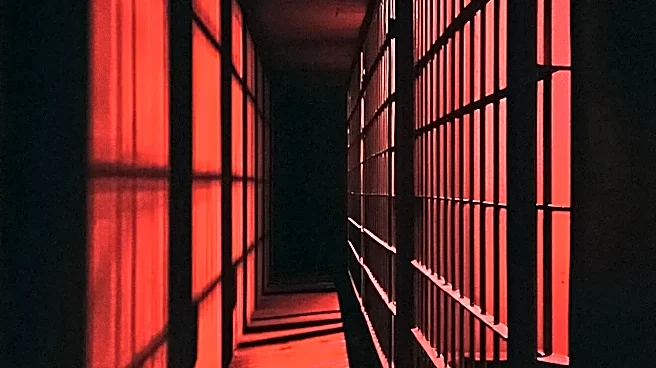

When it comes to horror, what we don’t see is almost always more terrifying than what we do. While gore has its place, the most skilled filmmakers know that the greatest scares come from suggestion, not spectacle. So how do they do it?
The Terror of Imagination
The fundamental
rule of unseen horror is simple: your own imagination will create something far more disturbing than any special effect. When a character disappears into the darkness or a door slams shut on a struggle, the film outsources the horror to you. The audience is left to fill in the blanks, and our minds, wired for worst-case scenarios, conjure up fates more personal and ghastly than a director could ever depict. This is why the ambiguous fate of the student filmmakers in 'The Blair Witch Project' remains so chilling decades later. We never see their demise, but the sounds of their final moments in that dark, lonely tent force us to picture an end for them that is uniquely our own, and therefore, uniquely terrifying.
Sound as a Psychological Weapon
Our ears are often more vulnerable than our eyes. Sound in horror bypasses logic and plugs directly into our primal fear responses. A sudden, sharp crack, a wet crunch, or the abrupt cut to dead silence can signal a brutal end without showing a single drop of blood. Sound designers are masters of manipulation. They use low-frequency rumbles, known as infrasound, that we feel more than we hear, creating a physical sense of dread and unease. Think of the off-screen death of Lambert in 'Alien'. We don't see the Xenomorph kill her; we hear it. Her panicked pleas, the creature's hiss, and the sickening final sounds are enough to paint a horrifyingly complete picture. The sound becomes the violence.
Suspense Is Scarier Than Surprise
The master of suspense, Alfred Hitchcock, famously distinguished between surprise and suspense with his 'bomb under the table' theory. Surprise, he explained, is when a bomb suddenly explodes, giving the audience 15 seconds of shock. Suspense is when the audience knows the bomb is under the table, but the characters don't. That creates 15 minutes of unbearable tension. This principle is the engine of the unseen kill. The fear isn't in the moment of death, but in the agonizing anticipation of it. Knowing a character is walking into a trap creates a powerful sense of dread and participation. The audience is helpless, forced to watch the inevitable unfold. This drawn-out anxiety is a much more potent and lasting emotion than a quick jump scare.
The Power of the Reaction Shot
One of the most effective techniques for an off-screen kill is the simple cutaway to a witness. We see the buildup of a violent act, the camera cuts away from the victim at the crucial moment, and instead, we see another character’s face contorted in horror. In that instant, their expression tells us everything we need to know. David Fincher’s 'Se7en' provides one of the most famous and devastating examples. We never see what's in the box, but we don’t have to. Brad Pitt's raw, agonized reaction as he understands the killer's final act is more harrowing than any graphic reveal could ever be. His face becomes the horror, and our minds are left to grapple with the awful truth he has just discovered.