





1. The Microscopic 'Armpit' Offside
You’ve seen it in hockey: a beautiful zone entry and goal, only for the play to be called back because a player’s skate was a millimeter offside 45 seconds earlier. Soccer now has its own version, and it’s just as infuriating. Welcome to the era of the 'armpit
offside.' Using VAR, officials draw lines on a frozen screen to determine if any goal-scoring part of an attacker’s body is ahead of the last defender. The problem? The official rule says the arm doesn't count, but the upper arm and shoulder—the T-shirt line—do. This has led to stunning goals being disallowed because a player’s armpit was deemed fractionally ahead of a defender’s trailing foot. It’s a decision that takes minutes of analysis with digital lines, feels completely against the spirit of the game, and leaves fans wondering if they can even celebrate a goal anymore. It’s the perfect equivalent of the NHL’s torturous, frame-by-frame offside reviews that kill the flow and joy of the game.
2. The 'What Is a Handball?' Existential Crisis
In hockey, everyone argues about what constitutes goaltender interference. Did the forward’s presence affect the goalie’s ability to make a save, or was it incidental contact? There's a rule, but the interpretation feels entirely subjective. Soccer’s equivalent is the handball. The rule has been tweaked endlessly, but the debate rages on: did the ball hit the hand, or did the hand hit the ball? Was the player's arm in an 'unnatural position'? What even *is* an unnatural position for a human body flailing through the air? In a 2022 World Cup quarterfinal, a ball grazed the hand of Portuguese defender Bruno Fernandes in the box, but no penalty was given. Pundits and fans debated for days. Just like goalie interference, two people can watch the same replay in slow motion and come to completely opposite conclusions, each utterly convinced they are right. Technology doesn’t provide clarity; it just gives us more angles from which to argue.
3. The 'Clear and Obvious Error' Standard
The entire premise of VAR in soccer and video review in the NHL is to correct a 'clear and obvious' mistake by the on-field officials. The problem is that the definition of 'clear and obvious' is, well, not clear or obvious. In countless Premier League matches, a player goes down in the box after contact that looks like a penalty to half the viewers and a dive to the other half. The referee makes a call—or a non-call—and the game moves on. The VAR official then reviews the play but decides the initial call wasn't a 'clear and obvious error,' so they don’t intervene. This creates a second, more infuriating layer of debate. It’s no longer just about whether it was a foul; it’s about whether it was *foul enough* to overturn. This is the soccer version of the NHL’s Situation Room in Toronto declining to overturn a controversial call on the ice because the replay evidence wasn't 'conclusive,' leaving fans screaming at their TVs about a system designed to get the call right, but which often just punts on the decision.
4. The Penalty Kick Do-Over
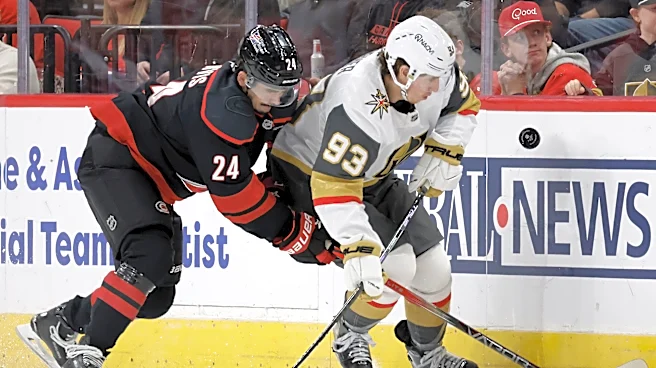
There are certain rules in sports that feel needlessly pedantic, enforced only because high-definition replay makes it possible. In hockey, it’s the dreaded 'puck over the glass' delay-of-game penalty. In soccer, it’s the goalkeeper’s foot position during a penalty kick. For decades, goalies crept off their lines to narrow the angle; it was part of the gamesmanship. But with VAR, officials can now check, down to the centimeter, whether the keeper’s back foot was touching the goal line at the exact moment the ball was kicked. We saw this play out in the 2019 Women’s World Cup, where penalties were retaken after saves because the keeper was an inch off their line. It feels like a technicality overriding a moment of supreme athletic drama. It’s soccer’s version of calling back a goal because a player’s helmet strap was undone—a microscopic infraction that has an outsized impact on the game's biggest moments.
5. The Phantom Foul vs. 'Let Them Play'
Every Stanley Cup Playoff series has a moment where a player is tripped, hooked, or cross-checked with no call, and the announcer says, 'The referees are letting them play.' Then, in the next period, a similar, softer infraction gets called, leading to a game-changing power play. The inconsistency drives fans mad. This is the weekly rhythm of a soccer match. One referee might allow physical, shoulder-to-shoulder challenges, fostering a fast, flowing game. Another might call a foul for the slightest touch. VAR was supposed to help, but it often adds another layer of inconsistency. A VAR official in one match might see a slight tug of a jersey as a clear penalty, while another in a different game sees the same thing and deems it normal physical play. This subjective application of the rules, from the on-field ref to the video ref, creates the exact same sense of bewilderment and frustration felt by hockey fans who just want to know what, exactly, a penalty is tonight.