




It’s one of the most iconic images in fantasy: a witch on a broomstick, silhouetted against the moon. But in the world of Wicked, Elphaba’s broom is far more than a simple accessory; it’s a storyteller in its own right.
An Unassuming Beginning
When we first see the broom, it
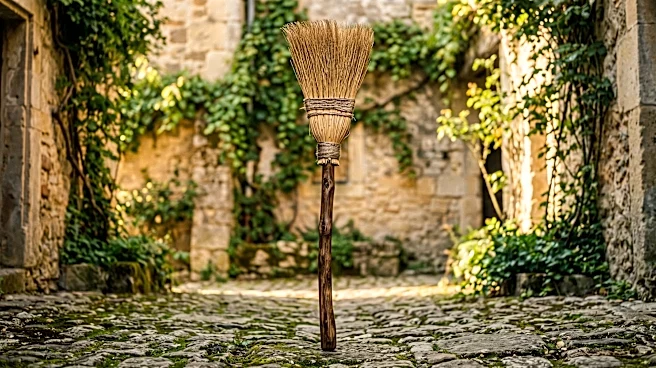
has no magical properties at all. In the stage musical, it’s a humble janitor's broom that Elphaba uses to block the door during the standoff in the Wizard's throne room. This mundane origin is crucial. It grounds Elphaba not as a destined witch, but as a resourceful and cornered individual. The broom isn't an inherited magical artifact; it's just a thing she grabs in a moment of desperation. This initial use establishes it as a tool of the ordinary, tying Elphaba to a sense of practicality and defensiveness rather than inherent wickedness or power.
A Gift of Friendship
The broom's meaning shifts dramatically thanks to Glinda. In a moment that solidifies their complicated bond, Glinda gifts Elphaba an 'absolutely absurd' old broom to replace the one confiscated by Madame Morrible. It’s an awkward but sincere gesture of friendship, one of the first Elphaba has ever truly received. Glinda, in her own self-centered but well-meaning way, tries to make Elphaba happy. From this point forward, the broom is no longer just an object. It becomes a tangible symbol of their connection, a reminder that even in their darkest moments, their friendship has changed them both for good.
The Instrument of Defiance
The show’s defining moment, 'Defying Gravity,' is where the broom earns its iconic status. As Elphaba reads from the Grimmerie, she doesn't cast a spell on herself, but on the broom. It's this object, a gift from her only friend, that levitates and carries her into the sky. Here, the broom transforms into an extension of her own innate power and her newfound resolve. It’s the vehicle for her rebellion. Flying away from the Emerald City, she isn’t just escaping; she’s making a public declaration of war against the Wizard's corruption. The broom becomes a symbol of liberation, her decision to stop playing by the rules of a society that has rejected her. It is her means of rising above the lies and literally defying the gravity of Oz's oppressive expectations.
A Tool of Propaganda
Once Elphaba is declared the 'Wicked Witch of the West,' the Wizard and Madame Morrible twist the image of her on her broomstick into a symbol of terror. It becomes the central image in their propaganda campaign to turn the citizens of Oz against her. The very act that represented her freedom is reframed as a sign of her malevolence. This is why the Wizard tells Dorothy to 'bring me the broomstick'. In asking for the broom, he isn't just seeking a magical trinket; he's demanding the symbol of his enemy's power. Capturing it would be a symbolic victory, proving that he had successfully brought the defiant witch down.
A Legacy Left Behind
In the end, after Elphaba's staged 'melting,' the broom is all that is left of her public persona. When Glinda confronts Madame Morrible, the broom is sometimes shown being thrown into a fireplace, a final, futile attempt to erase Elphaba's legacy. But its meaning endures through Glinda, who knows the truth behind the symbol. For her, it will forever be a reminder not of a wicked witch, but of her friend's sacrifice and their shared history. It represents the powerful, defiant, and ultimately good person Elphaba truly was. It's a testament to the fact that even when someone is gone, the impact they made and the symbols they leave behind can continue to tell their story.