



The Age of Fire and Spontaneity
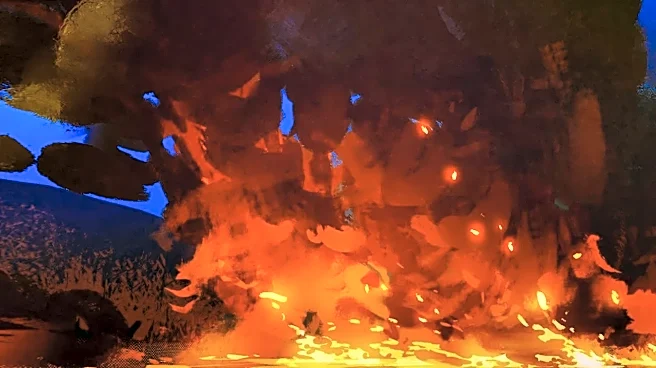
In the beginning, there was fire. The first Burns, both on San Francisco's Baker Beach in 1986 and later in the Black Rock Desert, were gritty, analog affairs. Entertainment was what you and your friends made of it. It was radical self-expression born
of circumstance. The aesthetic was more "Mad Max" than rave—a culture of fire spinners, drum circles, and hand-built sculptures intended for cathartic destruction. Technology, if you could call it that, was a generator to power a single string of lights or a small sound system. The deep, dark playa night was punctuated by the Man, the bonfire, and whatever small lights participants carried. It was a stark, almost primal, version of the festival.
The Rise of the Mutant Vehicle
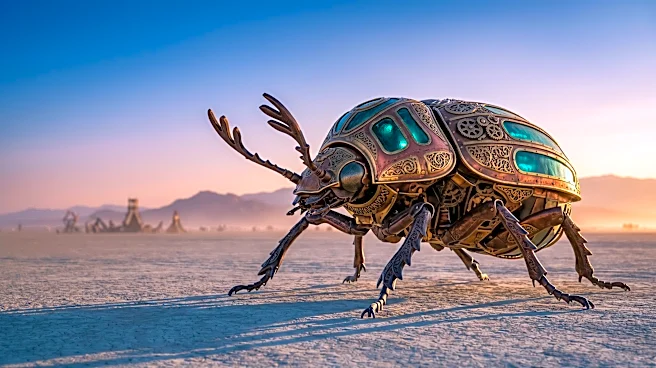
The seeds of the great light-up began with the art car, officially known as the Mutant Vehicle. As the event grew in the '90s and early 2000s, so did its footprint, making transportation a necessity. But this was Burning Man, so a golf cart wouldn't do. Participants began radically altering vehicles until they were unrecognizable, creating mobile sculptures. At first, these were decorated with paint and scrap metal. But as artists sought to make their creations visible—and safe—on the pitch-black playa at night, lights became essential. Early efforts involved neon tubes and traditional bulbs, but these were power-hungry and fragile. The real revolution was just around the corner.
The LED Arms Race
The 2010s changed everything. Suddenly, cheap, durable, and programmable LED light strips became widely available. Combined with more efficient battery technology, this unleashed an explosion of creativity and scale. What was once a single string of lights became a thousand. A thousand became a hundred thousand, mapped to 3D models and reacting to music and movement. The simple art car became a rolling nightclub with a state-of-the-art sound system and a light show visible from a mile away. It wasn't just cars; large-scale art installations like the Tree of Ténéré in 2017 featured over 100,000 individually addressable LEDs, creating an interactive forest of light. Spectacle became a new form of participation.
A Cultural Divide: Spectacle vs. Self-Reliance
This technological escalation has not been without controversy. For many longtime Burners, the LED boom is connected to the rise of so-called "plug-and-play" or "turnkey" camps. These camps, sometimes costing thousands of dollars, provide an all-inclusive resort-style experience, which critics argue is contrary to the core principle of Radical Self-Reliance. The fight over this convenience culture has been a major conversation for over a decade, with some feeling it creates a spectator-heavy environment. While the organization has taken steps to curb the most egregious examples, the tension remains. The question many ask is whether the focus on creating an Instagrammable spectacle has diluted the challenging, participatory nature that defined the event's soul.