


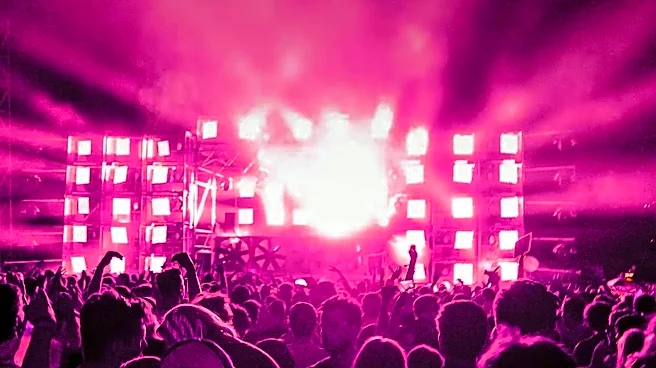
The Show Between the Shows
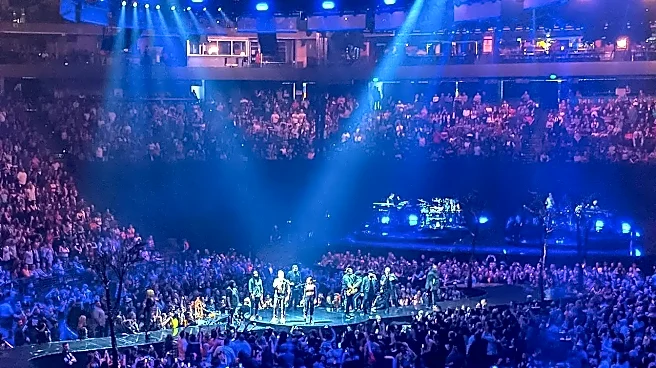
At a major music festival, the gap between one act ending and the next beginning is often just 30 minutes, and sometimes as little as 15 or 20. In that window, a small army must clear an entire band’s worth of gear and perfectly set up the next one. A delay
doesn't just frustrate the audience; it can throw the entire day's meticulously planned schedule into chaos. Success isn’t about frantic rushing; it’s about preparation that began months earlier. The stage manager, the operation's director, has already absorbed every technical rider, which details each band’s specific needs—from microphone preferences to stage plots showing where every piece of equipment goes. They’ve created a master plan for the day, and now, the clock is ticking.
The Organized Teardown
The moment the stage is clear, a swarm of black-clad crew members materializes. Their first job is to get the outgoing band’s equipment offstage as quickly as possible. This isn’t a chaotic free-for-all; it's a series of parallel operations. One team handles the drum kit, another focuses on guitar and bass amplifiers, while audio technicians unplug microphones and cables. The goal is to move everything to a designated backstage area for a proper breakdown later, freeing up the main stage immediately. This process is led by a stage manager who acts like a traffic controller, ensuring a smooth flow of people and gear in a high-pressure environment. Every crew member has a specific, pre-assigned task to avoid overlap and maximize efficiency. It’s a process that looks like a pit stop in a Formula 1 race, where every person knows their role implicitly.
Rolling Risers and Smart Backlines
The secret to a fast reset often lies in a simple but brilliant piece of stagecraft: the rolling riser. Instead of setting up a drum kit piece by piece, the next band's entire drum set, and sometimes keyboard rigs, are pre-assembled on a platform with wheels. As the previous band's gear is cleared, the new riser is simply rolled into its precise, pre-marked position on stage. This single innovation can slash setup time. Another key strategy is the use of a “festival backline.” Organizers often provide a shared set of high-quality, universal gear like speaker cabinets and even drum shells. While artists bring their own specific snare drums, cymbals, or amp heads, using shared infrastructure minimizes what needs to be swapped. This standardization is crucial for keeping one-stage festivals running on a tight schedule.
Patching, Power, and Line Checks
With the new equipment in place, the technical crew takes over. Audio engineers begin the “patching” process, connecting every microphone and instrument to the sound system via a complex web of cables run to a central stage box. This is where pre-show planning is critical; a master input list ensures every channel on the soundboard corresponds to the right instrument. Technicians work in parallel, with one crew focusing on the on-stage monitor mixes for the musicians, another handling the main Front of House (FOH) sound for the audience, and a third confirming the wireless microphone frequencies are clean. The final step is the line check. This isn’t a full soundcheck; it’s a rapid-fire confirmation that every input is working. You'll hear the iconic “check one, two” from the vocal mics and the quick thump of each drum as the engineer ensures a signal is present before the band walks out to a perfectly set stage.