




It’s one of the simplest actions you can take, yet it has the power to make or break an entire outfit. Properly buttoning your jacket isn't just about arbitrary rules; it’s about using the garment's design to instantly look sharper and more put-together.
The Principle: Creating the 'V'
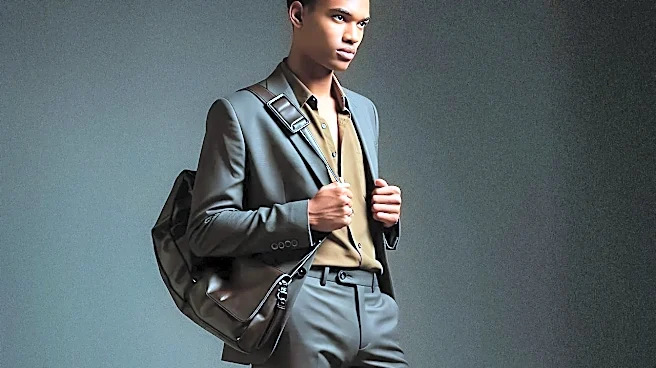
At its core, the logic behind buttoning a jacket is all about silhouette. When you fasten the correct button, you cinch the jacket at your natural waist, creating a pronounced 'V' shape across your torso. This simple act does two crucial things: it visually broadens your shoulders and slims your midsection. A buttoned jacket provides structure, turning a potentially boxy or flappy garment into one that cleanly frames your body. Unbuttoned, a jacket can hang open and add perceived width; buttoned correctly, it carves out a more defined and flattering shape. It’s not just a rule; it’s an optical illusion that works in your favor.
The Two-Button Jacket: Top Button Only
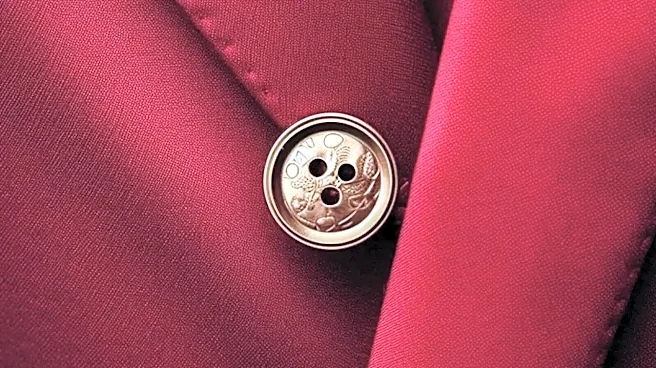
The two-button jacket is the modern workhorse of menswear, and its rule is the simplest to remember: always fasten the top button when standing, and never fasten the bottom one. Tailors cut these jackets with the assumption that the bottom button will remain undone. The fabric is designed to drape cleanly over your hips from the top button. If you fasten the bottom button, it pulls the jacket too tightly, causing the fabric to bunch and create an unflattering 'X' of tension across your waist. This restricts movement and completely disrupts the intended silhouette. Always unbutton your jacket when you sit down to prevent creasing and strain on the fabric.
The Three-Button Jacket: Sometimes, Always, Never
For a three-button jacket, the classic mnemonic is 'sometimes, always, never,' moving from top to bottom. You can 'sometimes' fasten the top button, you should 'always' fasten the middle one, and you should 'never' fasten the bottom one. The middle button is positioned at the natural waist and does the heavy lifting of creating that V-shape. The bottom button, like on a two-button jacket, is purely structural and decorative; buttoning it will throw off the suit's tailoring. The top button is often a matter of preference and can depend on the jacket's lapel roll. On many three-button jackets, the lapel is designed to roll over the top button, in which case it should be left undone.
Double-Breasted Jackets: A Different Game
Doublendressed jackets follow a different set of conventions because their design is inherently more structured. To maintain their sharp, formal lines, they should generally be kept buttoned, even when sitting. The most common configuration is the '6ndon4', which means six buttons are visible but only four are functional. A standard approach is to fasten all the buttons that have a corresponding hole, though some style enthusiasts leave the bottom button undone for a touch of modern nonchalance. Unlike their singlendbreasted counterparts, leaving a doublendbreasted jacket completely unbuttoned can look disorganized because of the excess fabric.
The Effect on Waist and Legs
So how does this all connect to your waist and leg line? The fastening point of your jacket—known as the 'button stance'—acts as your visual waistline. By buttoning your jacket correctly, you create a cinched waist that draws the eye upward. This established waistline effectively lengthens the lower half of your body. The Vndshape of the lapels elongates your torso, which, in turn, makes your legs appear longer and more proportional. A higher button stance can make your legs look longer, while a lower one can lengthen the appearance of your torso. An unbuttoned jacket, or one buttoned incorrectly at the bottom, can visually cut you in half or make you look shorter by disrupting this crucial vertical line.