





The Unlikely Contender
On paper, Million Dollar Baby was a project destined for the Hollywood dustbin. Based on a collection of short stories by F.X. Toole, the screenplay by Paul Haggis was dark, character-driven, and featured a gut-wrenching final act. It was a story about
a determined female boxer, her grizzled trainer, and the weight of regret—hardly the stuff of a popcorn-friendly hit. Studios agreed, and the script languished in development hell for years. Even with a legend like Clint Eastwood attached to direct and star, his longtime home at Warner Bros. balked at the $30 million budget. It was considered too risky, too somber, and too small. The project was only saved when Eastwood and producer Albert S. Ruddy secured half the financing from an independent company, Lakeshore Entertainment, which also handled foreign distribution. Warner Bros. then agreed to cover the other half, effectively sharing the risk on a film very few in the industry believed in.
A Different Kind of Fight Plan
Instead of the typical wide release, where a film opens on thousands of screens simultaneously backed by a massive advertising blitz, Warner Bros. opted for a classic “platform release.” Million Dollar Baby opened in just eight theaters in December 2004. The strategy was simple and old-fashioned: let the critics see it first, build awards buzz, and rely on word-of-mouth to turn a flicker of interest into a wildfire. It was a calculated gamble. A wide release for a film like this could have seen it disappear in a weekend, crushed by holiday blockbusters. The slow rollout allowed the film to find its audience organically. As rave reviews poured in and Oscar nominations followed, the film’s reputation grew. It wasn't just a movie anymore; it was an event that people felt they needed to see to be part of the cultural conversation.
When Word-of-Mouth Became a Megaphone
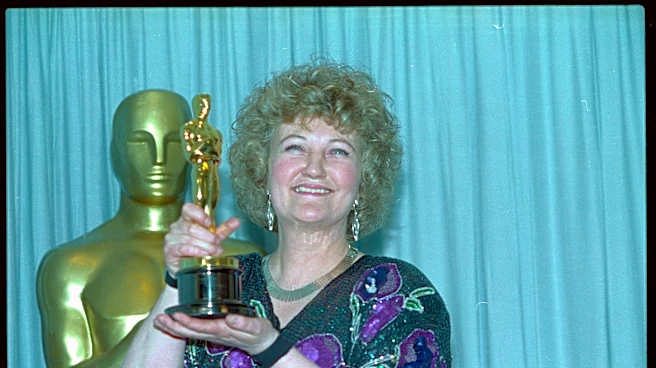
The strategy worked better than anyone could have imagined. By the time the film expanded into wide release in late January 2005, it was already a critical darling and a serious Oscar contender. That weekend, it pulled in over $12 million and kept climbing. The buzz translated directly into ticket sales as audiences, intrigued by the acclaim for Hilary Swank, Morgan Freeman, and Eastwood, sought out the film. It ultimately grossed over $100 million domestically and another $116 million internationally, for a worldwide total exceeding $216 million—more than seven times its modest budget. This was a staggering return for a bleak drama shot in under 40 days. The film went on to win four major Academy Awards, including Best Picture, Best Director for Eastwood, Best Actress for Swank, and Best Supporting Actor for Freeman, cementing its status as both a critical and commercial phenomenon.
The New Hollywood Math
The success of Million Dollar Baby didn't just create a windfall for its backers; it sent a powerful message to the rest of Hollywood. It proved that adult-oriented dramas, if crafted with excellence and marketed with precision, could still be enormously profitable. It was a powerful counter-narrative to the prevailing wisdom that only IP-driven tentpoles could guarantee a return. The film's model—a modest budget, A-list talent working for scale, a patient release strategy, and an awards campaign—became a new playbook for prestige pictures. It validated the idea that quality could be its own marketing campaign and that an audience for serious, emotionally complex stories still existed. For a while, it emboldened studios to take more chances on character-driven films, proving that you didn't always need a superhero or a happy ending to land a knockout punch at the box office.