






The Tyranny of the Shoe
Let’s start with the most infamous source of tension: footwear. For years, an unwritten but brutally enforced rule dictated that women must wear high heels on the red carpet. This came to a head in 2015 when a group of women in their 50s, some with medical conditions, were reportedly turned away from a screening for wearing rhinestone-embellished flats. The incident, dubbed “Heelgate,” sparked an international outcry. In the years since, A-list stars have staged their own subtle (and not-so-subtle) protests. In 2016, Julia Roberts walked the entire length of the carpet barefoot, a radiant smile on her face. Kristen Stewart, a vocal critic of the policy, has made a habit of arriving in heels for the photographers before kicking them off on the steps
in 2018. While festival director Thierry Frémaux has repeatedly denied an official ban on flats, the on-the-ground reality for many attendees has been one of gendered discomfort and archaic expectation. The steps aren’t just a walkway; they’re a battleground for body politics.
A Strictly Timed Performance
Contrary to what the endless photo galleries might suggest, the Cannes steps are not a place for leisurely strolling. It is a tightly choreographed, high-pressure performance with a strict timetable. Guests are given specific arrival slots, and loitering is forbidden. The goal is to keep the human traffic moving to prevent bottlenecks and ensure the photographers, or “photo call,” get their clean shots. In 2018, the festival took this control a step further by banning selfies on the red carpet. Frémaux argued that selfies were “trivial” and slowed down the procession, creating “untimely disorder.” While he framed it as a move to restore elegance, many saw it as another way the festival controls its own image, ensuring that the only photos released are the polished, professional ones. You don't get to control your own narrative on the steps; you are a character in the festival's grand production.
The Physical Gauntlet
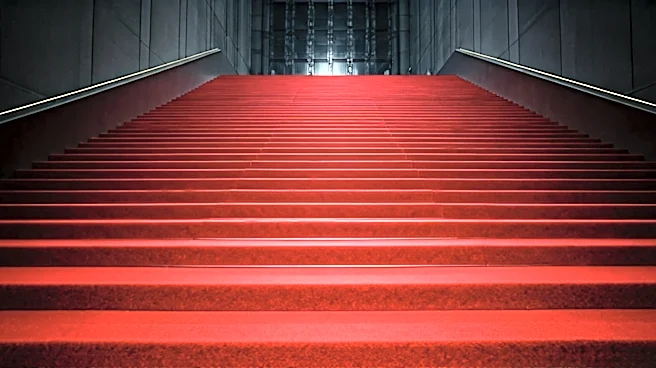
The steps themselves—all 24 of them—are a physical challenge. They are steep, often crowded, and under the glare of the world’s media. A stumble here isn't just embarrassing; it’s a moment that will be immortalized in a dozen online galleries by morning. In 2022, Jennifer Lawrence famously navigated the treacherous climb in a stunning red Dior gown, only to reveal she was wearing a pair of simple black flip-flops underneath, a practical choice to avoid a couture-clad catastrophe. The steps are covered in a pristine red carpet that is unforgiving to a stiletto heel, which can easily catch and cause a fall. Add in a flowing, multi-thousand-dollar gown, the blinding flash of hundreds of cameras, and the pressure to look serene and glamorous, and you have a recipe for pure terror. It’s less of a walk and more of a high-wire act.
The Ultimate Test of Poise
Ultimately, the “hate” for the steps is rooted in the immense psychological pressure they represent. It's a physical manifestation of Hollywood’s unforgiving hierarchy and its obsession with perfection. Every person on that carpet, from the A-list superstar to the aspiring producer, is being judged. Are they wearing the right thing? Are they moving with enough grace? Do they look like they belong? For a few hundred feet, they are subjected to an intense level of scrutiny that can define a career moment, for better or worse. The steps are a crucible. Those who navigate them flawlessly project an image of effortless cool. Those who trip, or look overwhelmed, risk becoming a meme. And those who cleverly subvert the rules, like Stewart or Roberts, create an entirely different kind of iconic moment—one that rebels against the very perfection the festival tries so hard to manufacture.