





First Off, What Is Double-Faced Fabric?
Imagine two separate layers of fabric, like fine wool or cashmere, being woven together on a loom at the same time to create a single, unified piece of cloth. That's double-faced fabric. It’s not two pieces glued or fused together; it's one textile with
two identical, finished 'front' sides. Because of this, the fabric has no 'wrong' side, making it inherently reversible and visually clean from every angle. This technique, which originated in high-end Italian mills, results in a material that has a beautiful drape and structure all on its own.
Traditional Coats Have Something to Hide
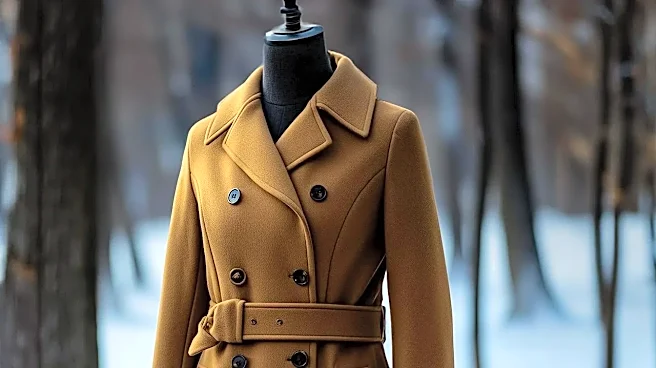
Think about a standard winter coat. It has an outer shell, but inside, there’s a silky lining. That lining isn’t just for comfort or to help you slip the coat on easily. Its main job is to hide the messy reality of garment construction: raw fabric edges, bulky seams, darts, and internal stitching. A lining is essentially a curtain that covers up all the internal architecture that gives the coat its shape. It’s effective and efficient, but it adds an extra layer and bulk.
The Double-Faced Dilemma: Nowhere to Run
With double-faced fabric, the entire point is to have a garment that is as beautiful on the inside as it is on the outside, so adding a lining would defeat the purpose. But this creates a huge challenge for the tailor: with no lining to hide behind, every single seam and edge must be perfectly clean and finished. You can't use a standard sewing machine overlock stitch, as it would look bulky and unfinished. Every construction detail is completely exposed, demanding a level of precision far beyond typical coat-making.
The Art of the Invisible Seam
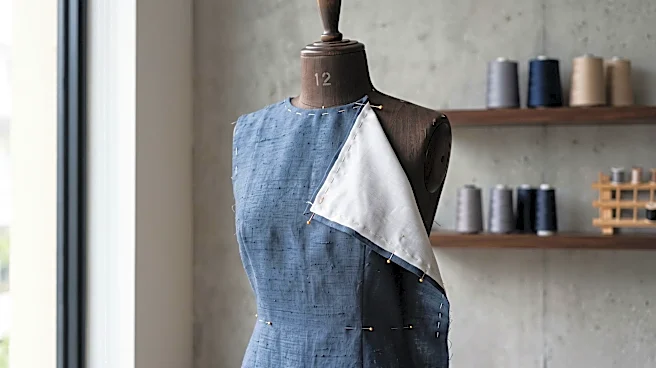
This is where the magic happens. To join two pieces of a double-faced coat, a tailor must perform a highly skilled, labor-intensive process almost entirely by hand. First, they carefully separate the two layers of fabric along the seam allowance, splitting the edge open by a small amount. The raw edges of each layer are then trimmed and folded inward, into the space between the layers. Finally, the folded edges are meticulously joined together with a tiny, invisible 'ladder stitch'. This creates a single, flat, and flawless seam with no visible stitching on either side. This process has to be repeated for every single seam on the coat, from the sides and shoulders to the sleeves.
Why It's Worth the Effort
This painstaking construction method is why double-faced coats command such a high price. The hours of hand-finishing are immense. But the payoff is a garment that is fundamentally different. It's significantly lighter than a traditional lined coat because it sheds that extra fabric layer. The fabric's structure provides warmth by trapping air between its two layers, offering impressive insulation without the bulk. The result is a coat with a soft, fluid drape that moves with the body, incredible comfort, and a clean, minimalist aesthetic that signals quiet luxury. It’s a testament to craftsmanship, where the value lies in the skill you can feel, not just see.